Get to Know: Chris Baker
A blog series by Claudia rose Walder
With Not For are proud to represent some of the best diverse and disabled talent in the UK. We are excited to bring you the next instalment of ‘Get To Know’, our monthly spotlight initiative to help platform the people we represent and introduce you to their unique stories. Leading the series is Claudia Rose Walder, founder of Able Zine and curator of all things related to disability culture. This month, she speaks to Chris Baker.
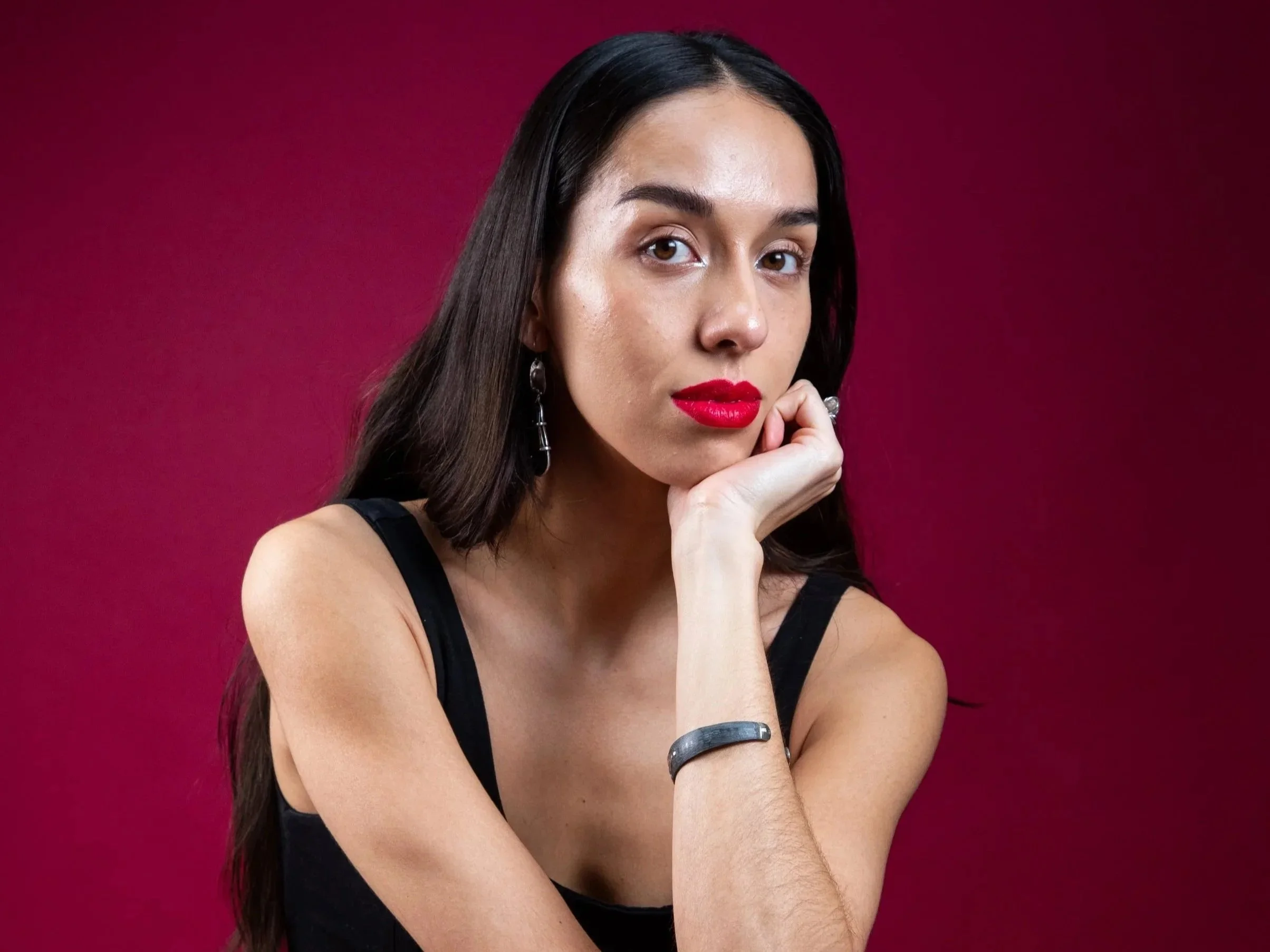
Claudia is latinx with long dark hair parted in the middle. She looks at the camera with her chin resting on her hand, wearing bright red lipstick against as red background.
Chris is a multi-hyphenate entrepreneur, writer, speaker and actor who is passionate about improving the futures of young people across the UK. He is the co-founder of Aspire2Change, an organisation that draws on the lived experiences of its volunteers and founders to deliver mentorship and workshops in schools, prisons, and youth organisations. Chris uses his personal journey to spark transformation, inspiring long-term change among young people in challenging circumstances.
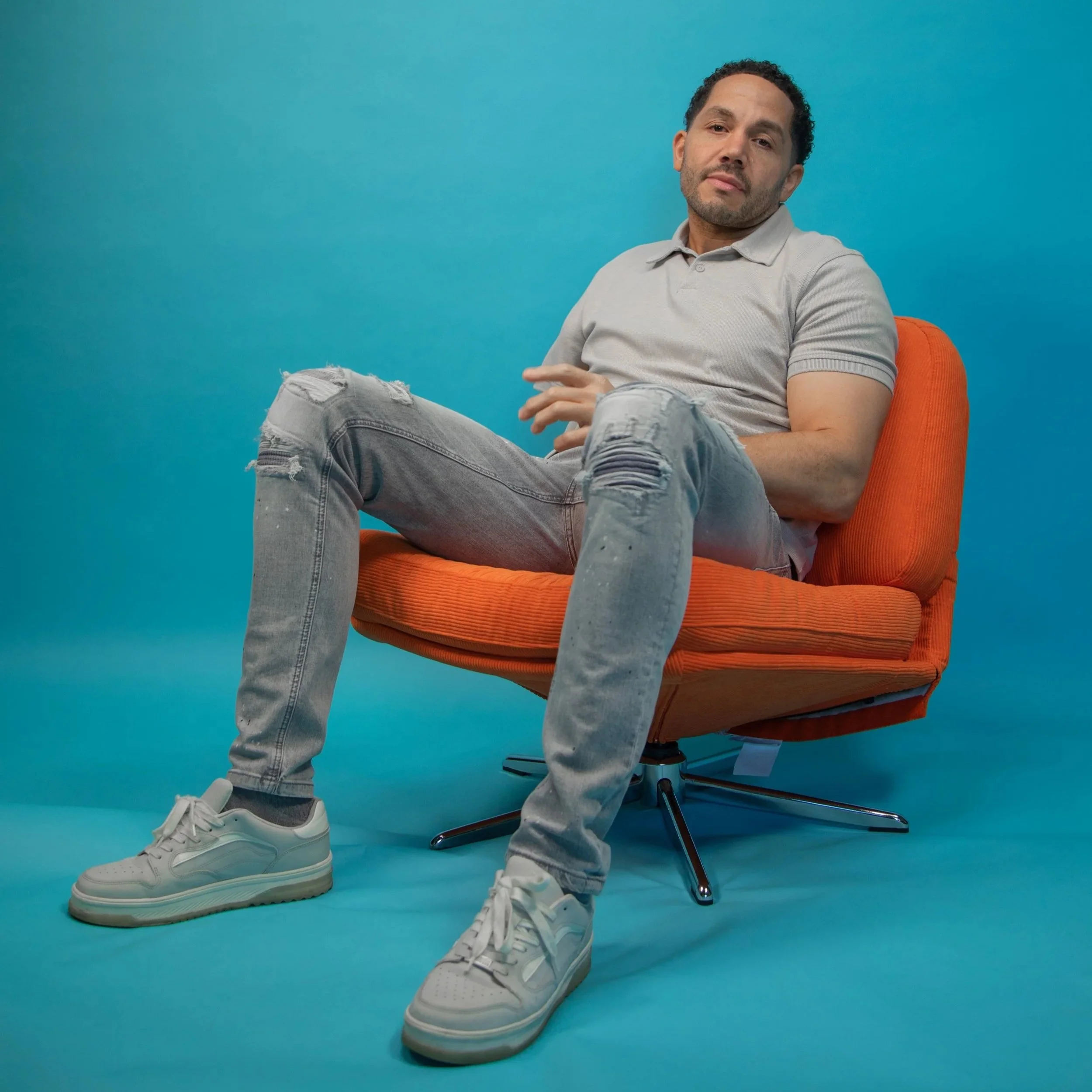
Chris is mixed race with short dark curly hair and brown eyes. He has upper limb difference and sits on an orange retro chair against a blue background. His expression is serious and he wears a grey t.shirt, jeans and trainers.
Claudia: Hey Chris, it’s a pleasure to meet you! Here’s a quick icebreaker: describe yourself in 3 words.
Chris: Resilient, grit and humour.
Claudia: Grit! I like that. Could you tell me a little bit about your upbringing?
Chris: I grew up in Enfield, North London. My childhood was a bit chaotic; household dysfunction and a lot of violence. My dad was in prison. I felt shame, which I projected onto people. I was angry, and that shame came out in insidious ways. I would seek attention, validation, and commit crimes. That's the kind of life I lived.
We moved house a lot, so relationships and friendships were never a long term. I first went to prison at 18 for fighting. Then at 22, I was on a motorbike, and I was doing stuff that I shouldn't be doing, like driving without a licence, and I'd been drinking. I ended up crashing and lost my arm in that police chase. That probably wasn't the “aha” moment, or even rock bottom. I had PTSD, and with the childhood adversity I had, I couldn't manage my emotions. I went deeper into depression and got angrier at society, and it landed me in a long-term prison sentence, serving five years.
Claudia: What was the turning point for you when things began to change?
Chris: I met this guy, Sam, and he was the first man in my life who ever spoke to me in a positive context, without manipulation involved. He believed in me, and he inspired me to change. That started my journey of transformation, just having one person who believed in me. When I came out of prison, I wanted to write a book. I wrote down my whole life, which helped me see what I went through and gave me a bit of compassion. I realised I wanted to use my story to prevent others from going down that path, and now I run a crime-prevention company that does exactly that.
Claudia: Wow, what a moving story. I can’t wait to read your book! Can you tell me more about your company, Aspire2Change, and how it began?
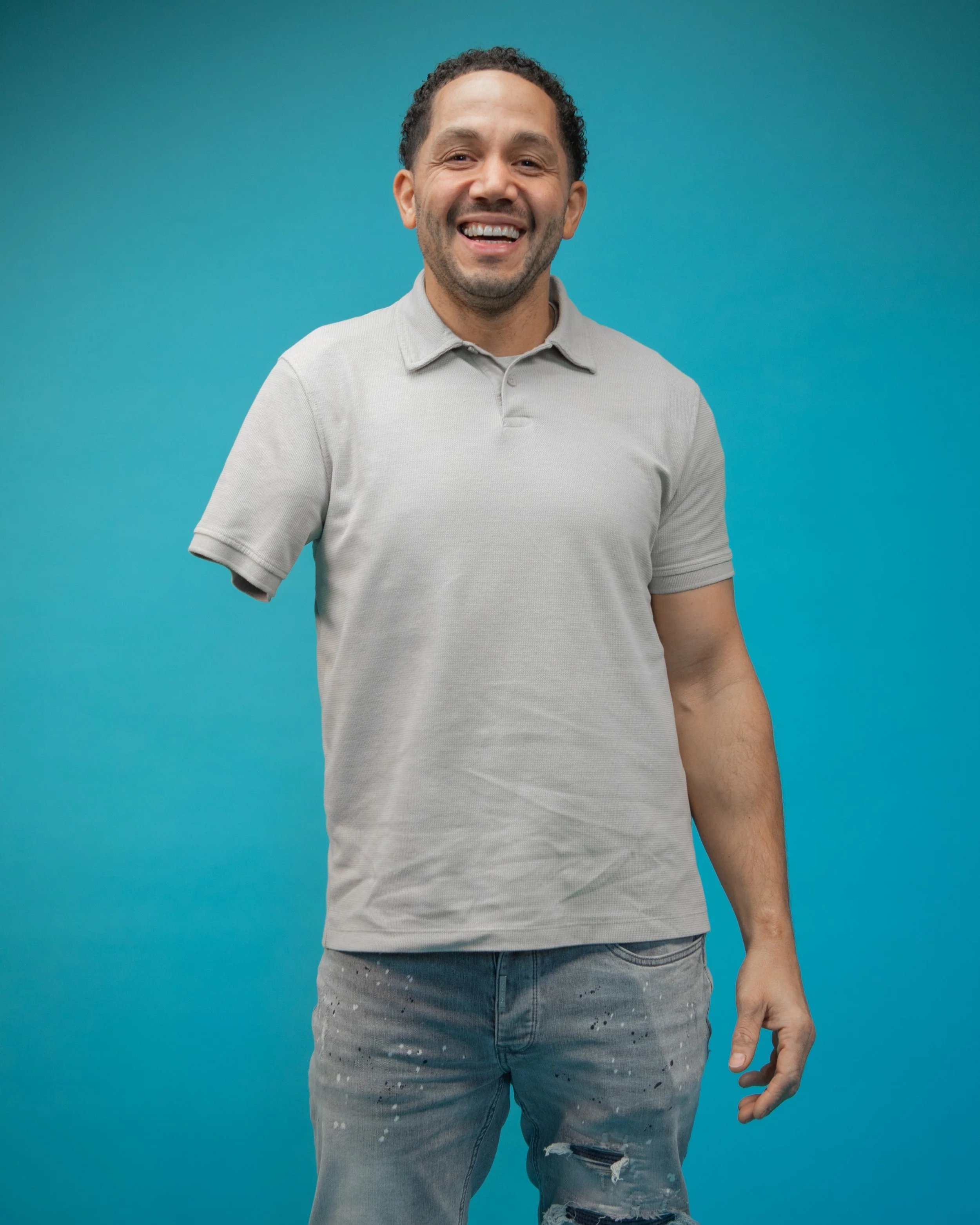
Another image from the same shoot - Chris is stood facing the camera smiling widely with his arm by his side.
Chris: I never used to read, and I started reading a lot of books because Sam told me that you need to read if you want to be an author. One book I read said that if you want to succeed in business quickly, partner with someone who is doing what you want to do. But with my background, finding people was hard. Then, I met Ash. He's Ash, I'm Chris, and that's where the A and C come from. He's got a company called Forever Young People that offers mentoring and support services to young people. We became partners, collaborated, and founded a new company. We’ve got some contracts with councils, work with local authorities and the police. Now it's growing, and things are getting a lot busier.
Claudia: How would you describe the scope of your work at Aspire2Change?
Chris: I go into schools, share my story, tell them what I went through, and try to prevent them from going down that path. I talk about consequences, knowing your worth, and building resilience. We have a 12-week programme, workshops, and 1-1 mentoring. We also employ people who have been through the criminal justice system or have lived experience, who can use their personal narratives to guide the kids and create actual relatability. We find it's much more impactful to have people with lived experience to get kids to engage and listen.
Claudia: How important do you think mentorship is for people?
Chris: I find that for a lot of people within the system, there's a massive sense of hopelessness. And when someone can mentor you and spark that hope back in you, I know personally that you will transform when someone believes in you and sparks hope within you. So I think it's about mentoring people to believe in themselves. And from there, the transformation is endless.
Claudia: I wanted to ask you about positive male role models and whether that's something you feel passionate about being?
Chris: I feel, personally, I've never had that in my whole life. It's not an excuse for my behaviour, but the lack of it definitely contributed to the adversity I went through. With no guidance from other men, there's only so much my mom could do from her position. So, I feel like that's key, because a lot of the kids I meet lack that positive male role model.
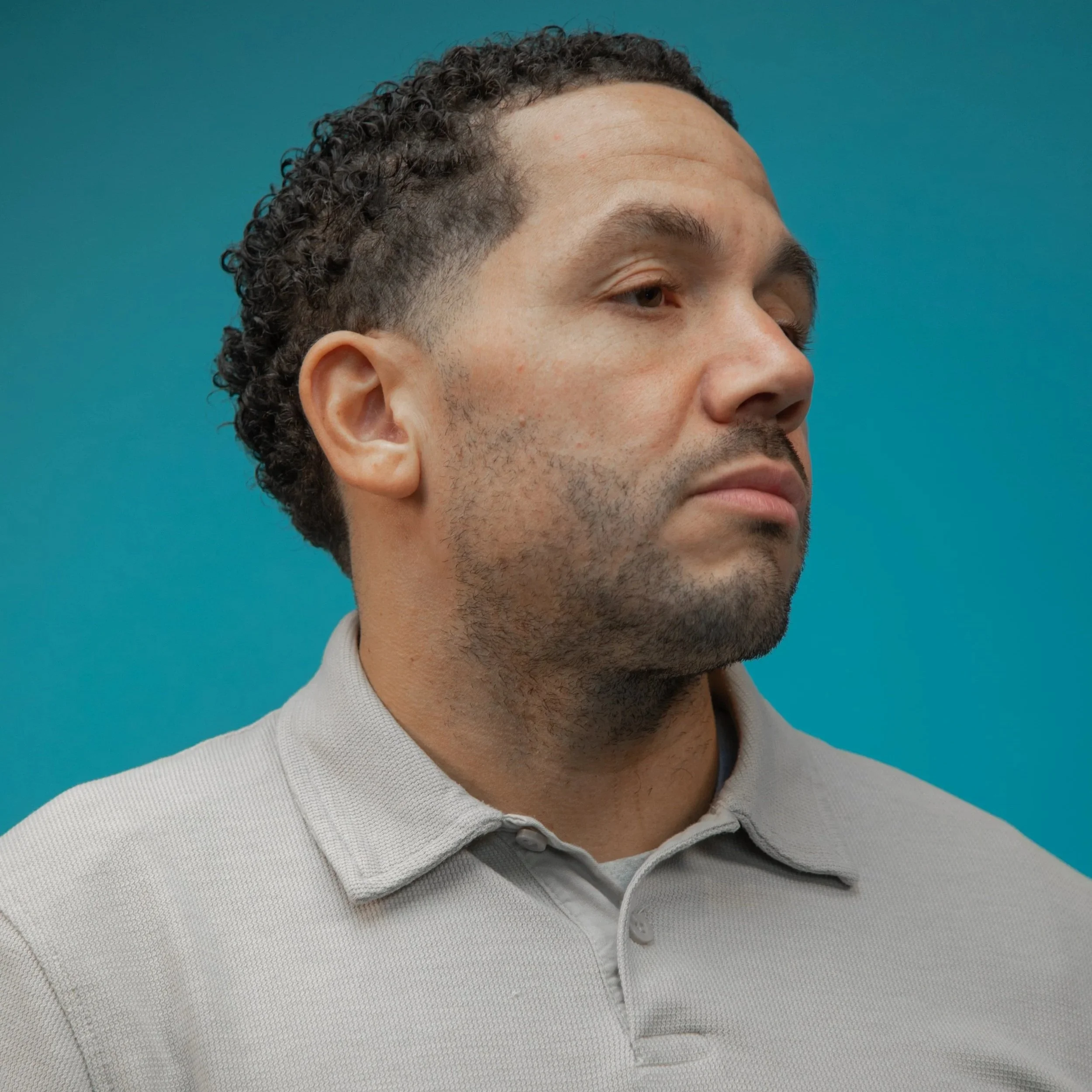
A close-up side profile of Chris looking to the side. He has dark stubble and his expression is neutral.
Claudia: Do you see yourself wanting to be more present in visual media to make a bigger impact on people you may not reach through the local communities you're working with?
Chris: I'm working with a ghostwriter to complete the book I've written about my story. But again, the kids I want to impact are very unlikely to pick up a book and read nowadays. So it would be good to be in a visual format. I would ideally like it to be a series, or something where they watch it, see themselves, and see how they could change without having to read a book.
Claudia: Do you think modelling can ever have a similar impact?
Chris: I do modelling and acting, and that's more about what it represents. I never used to feel comfortable after losing my arm, as a disabled person, to now be advocating for people, to help people feel better in themselves, is massive for me.
Claudia: What kind of acting do you do?
Chris: I got a little role in a film recently called Wasteman. I had to play a prisoner... The irony. I enjoyed it. Acting is something I wouldn't mind going into and learning more about, getting as good at it as possible. Hopefully, more opportunities will come.
Claudia: What's one thing in your career or your life so far that you're most proud of?
Chris: Repairing the relationship with my mum because my actions fractured that relationship continuously. Now, I’m in a position where, a few years ago, she said she was proud of me. To have the relationship now that we never had because of me, I think that's probably my proudest moment above all the other things that I’ve done.
Claudia: How does having a disability now affect how you see the world?
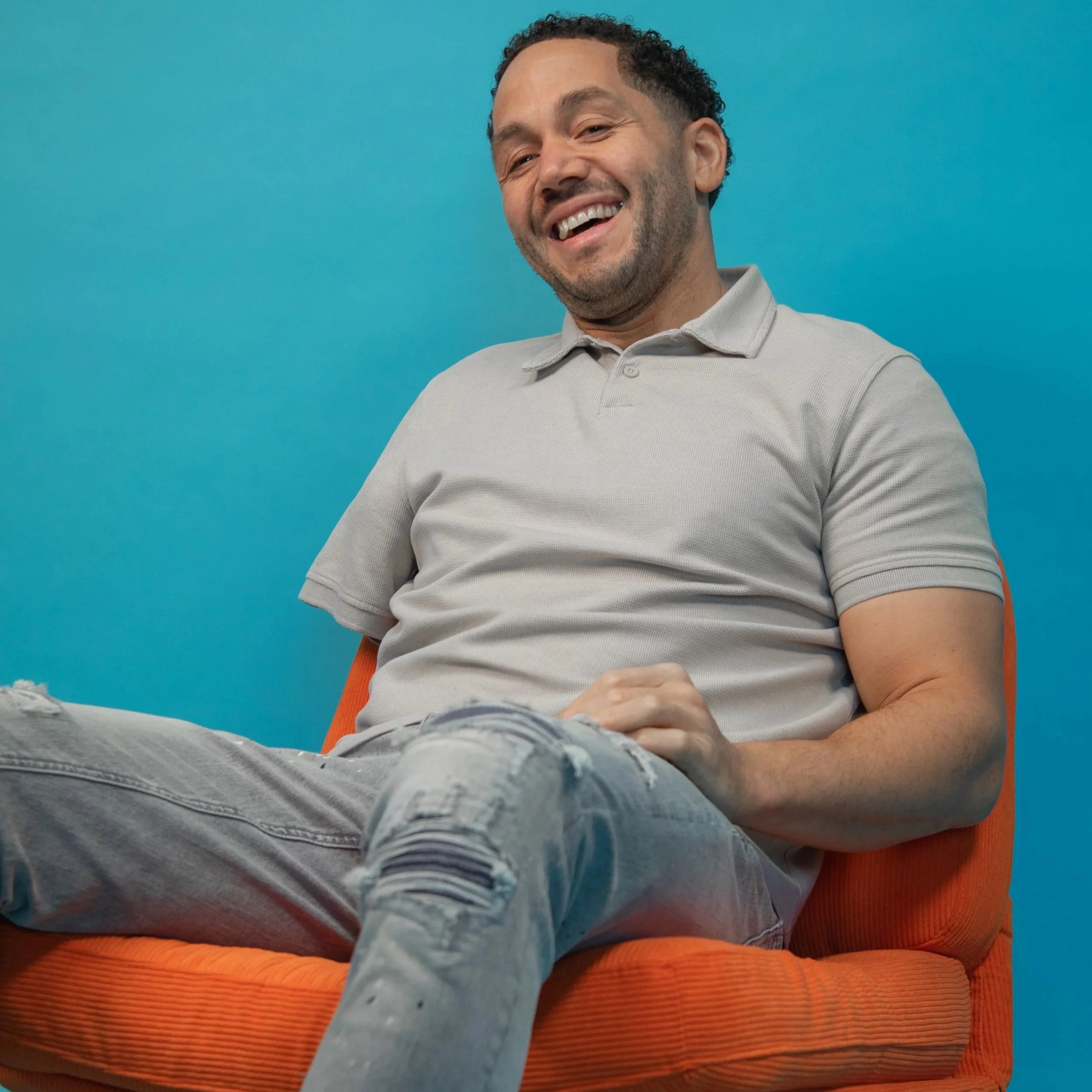
Chris is sat back on the orange chair with his hand on his lap, laughing into the camera.
Chris: It gave me a lot more empathy and compassion, because I lived half my life without a disability. I never really considered how hard it could be for people to have a disability or how the world perceives them. It gave me a totally different perspective. But on the flip side, it's been quite an advantage in doing what I do, because it's quite unique. It’s been strange to see that because of that and because of the bad things I've done, it's quite a USP. People see me and can say, "This guy's done this [thing] with one hand", so I see it in two different dynamics from two different positions.
Claudia: I think that's important for people to hear, because often people just associate disability with something negative. And actually, for everybody, it's different. It's got the pros and the cons.
Claudia: Lastly, what does it mean to you to be represented by With Not For?
Chris: I've been with other agencies, and I've never been treated the way I have here. You actually feel part of something. It's not just an agent trying to pitch you, it's like a family. It's massive to be part of this as they grow.
Claudia: Thanks Chris! Where can people follow you and support your work?
Chris: @chris_baker__ on instagram or on @a2c_aspire2change.
Claudia Rose Walder Martinez is a multidisciplinary creative whose work spans art, fashion, literature, print and digital media. She is the Founder and Editor-In-Chief of Able Zine, a publication and platform dedicated to promoting disability arts, culture, and representation.
Image credits: Photography, Mathushaa Sagthidas. Makeup, Aster Rose.