Get to know: Alex Mackenzie
A blog series by Claudia rose Walder
At With Not For, we are proud to represent some of the best, diverse, and Disabled talent in the UK. This month, Claudia speaks with Alex Mackenzie, a sound engineer, radio producer and podcaster from Leicestershire, whose work in media is shaped by a determination to challenge disability stereotypes.
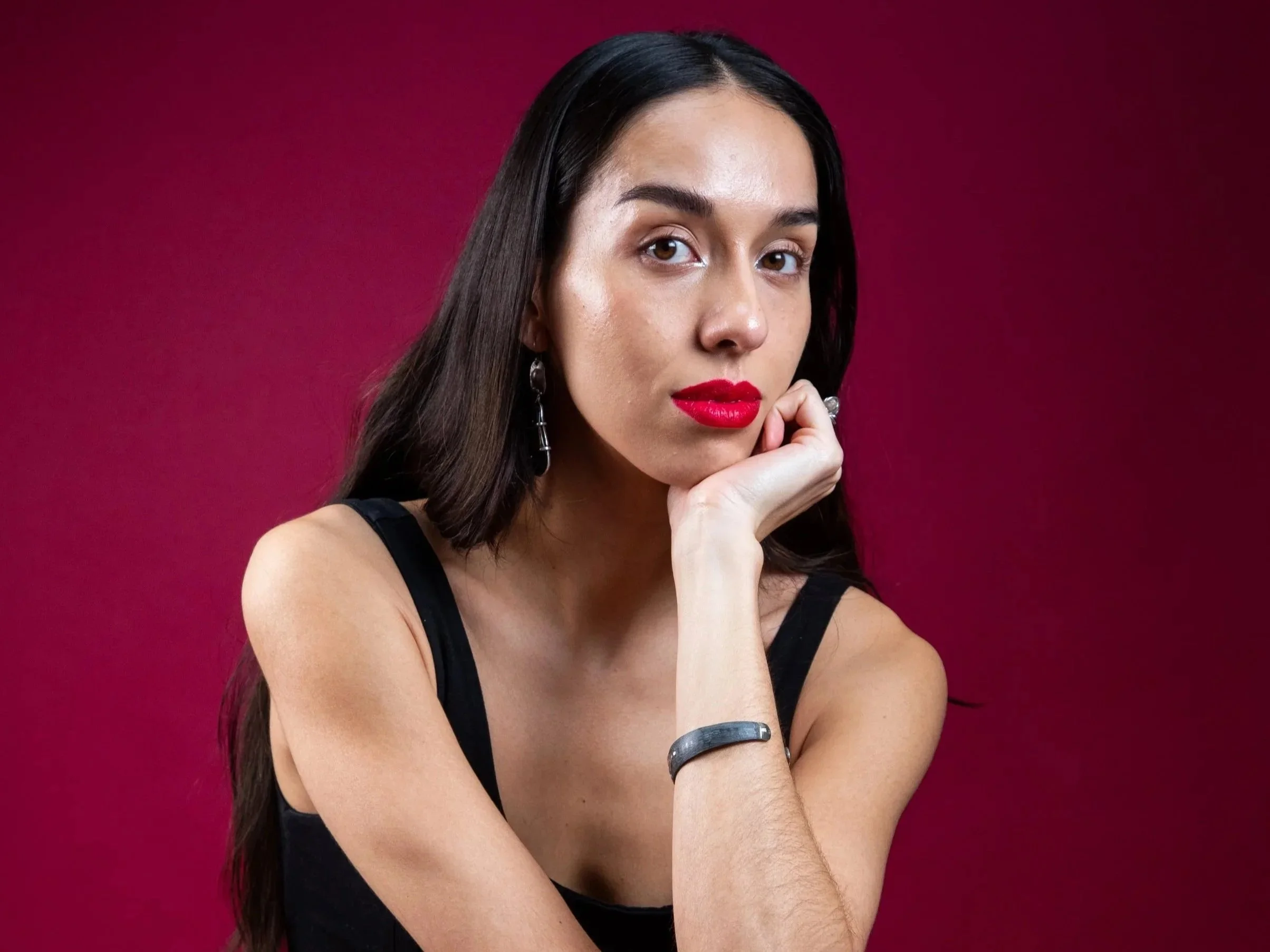
Claudia is latinx with long dark hair parted in the middle. She looks at the camera with her chin resting on her hand, wearing bright red lipstick against as red background.
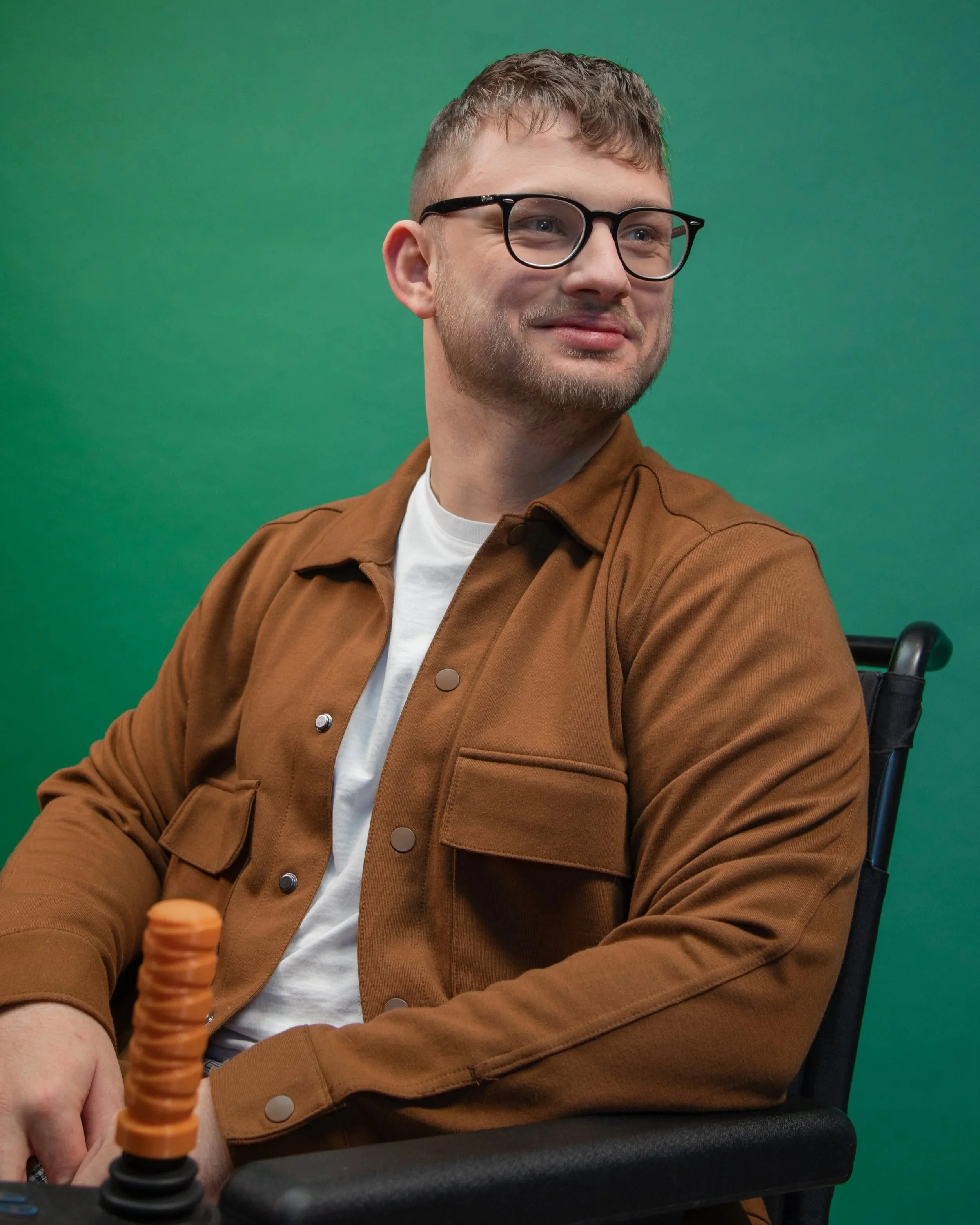
Alex is a white man with short brown hair and glasses. He sits in his wheelchair wearing a brown shirt and white t.shirt in front of a green backdrop.
Claudia: Hi Alex, it’s lovely to meet you. Before we get into it, let’s start with an icebreaker — describe yourself in three words.
Alex: Sarcastic, creative, and passionate about communication.
Claudia: Can you tell us a bit about your background, personally and professionally?
Alex: I’m from Market Harborough in Leicestershire, and I’m a sound engineer, radio producer, and podcaster. I’ve had cerebral palsy since birth, but growing up, I spent a lot of time trying not to look visibly disabled, and that took a real toll on my mental health. Later, I met my fiancé, Chloe, through a disabled specialist personal trainer, and she’s been a huge part of my journey. At the time, we didn't know she was disabled, too, but she's got various forms of arthritis and possibly fibromyalgia. Together, we co-founded Sticks and Copper, born of our frustration with the lack of honest disability media.
Claudia: How did you first get into media-making?
Alex: I originally thought I’d go into film, but when I studied Media Production at De Montfort University, I fell in love with radio and sound engineering instead. That led to an internship with BBC Radio Wales, where I worked on the Win Evans show and the Radio Wales afternoon show. It just so happened that a lot of the editors were on maternity leave, so I used my charm and backing of the degree and said, "Look, I'll edit the live radio for you.” I ended up doing much more than I expected, including live and post-production work, and meeting celebrities. Sometimes people within the BBC would question the producers, asking, “Why’s he doing that?” And Win’s producer at the time, Jason, would say, "Oh, Alex is doing it because he can do it.” But unfortunately, I couldn't afford to stay in Cardiff. I was spending 90% of what I was making on disabled-friendly accommodation, so I had to move on.
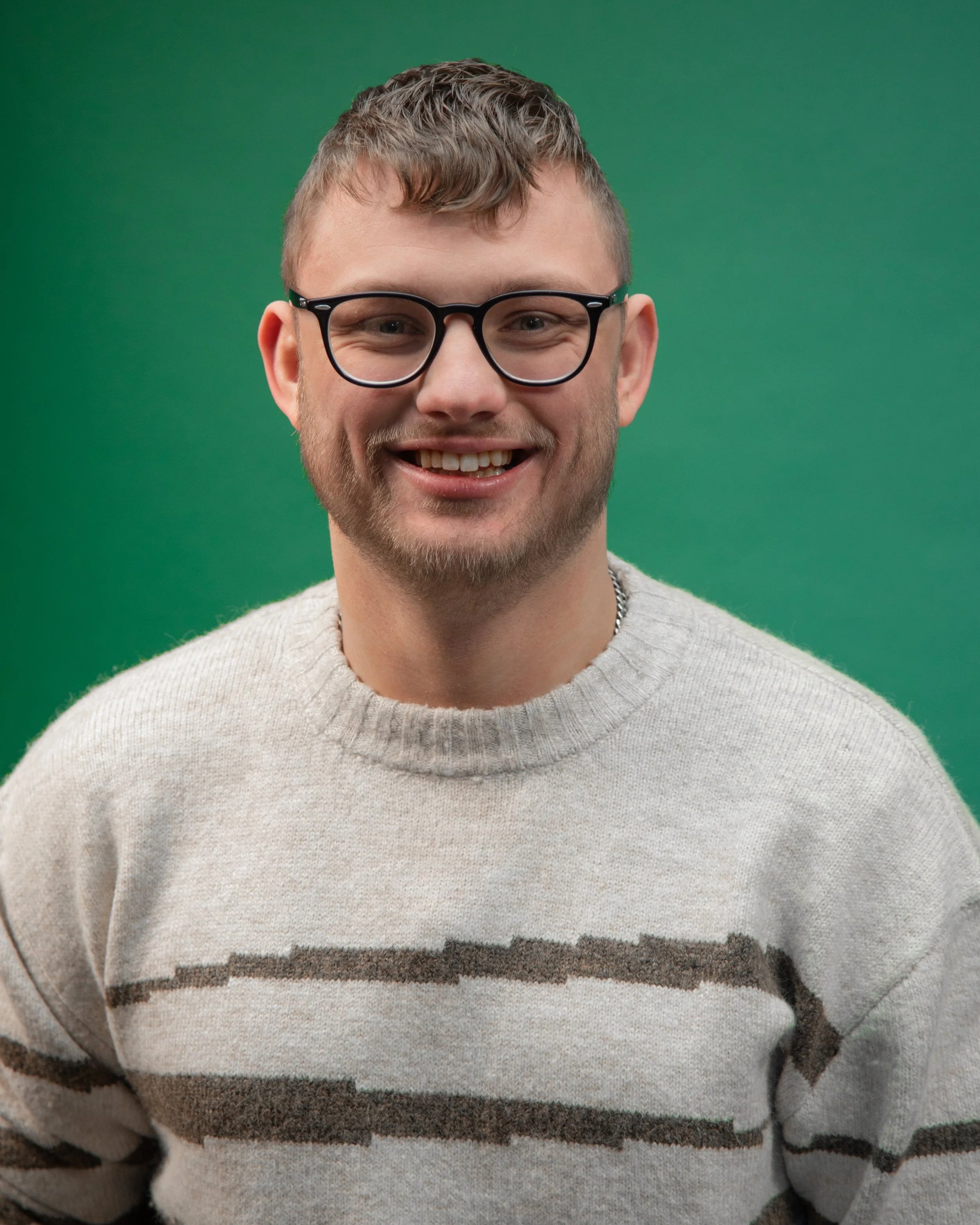
A headshot of Alex facing the camera and smiling, wearing a cream jumper with stripes on the front.
Claudia: What happened after the BBC?
Alex: It took a bit of time to rebuild, and I was hesitant to work with talent agencies again because I’d had bad experiences before. But a friend introduced me to Kelly at With Not For, and that opened the door to new work. I’ve edited podcasts with Charlie Randell of The Not Quite podcast and Cerys Davage of the Unbalanced podcast. And now I even do a bit of modelling. Chloe and I modelled in a car campaign through With Not For, which was my first proper day’s work in a long time. That meant a lot to me.
Claudia: How has living with a disability shaped the way you see the world?
Alex: Honestly, it’s made me a bit jaded. A lot of companies want disabled people in their campaigns and on their social media; they claim to be “disability confident”, but they don't really know what that means. I was once asked how to support a blind woman in the workplace. But I’m not blind, and we're not all the same. Even with cerebral palsy, someone could have CP, but if they're quadriplegic, I probably don't know what they need. But it’s also made me more driven. I want my work to speak for itself, and I want to make it impossible for people to ignore disabled talent.
Mission
Claudia: What does your mission look like now?
Alex: At the heart of it, I want to make brilliant-sounding work, but I also want to prove that disabled people are capable. I’ve realised I’m more capable than I thought, and a lot of that confidence has come from Chloe and from being around other disabled creatives.
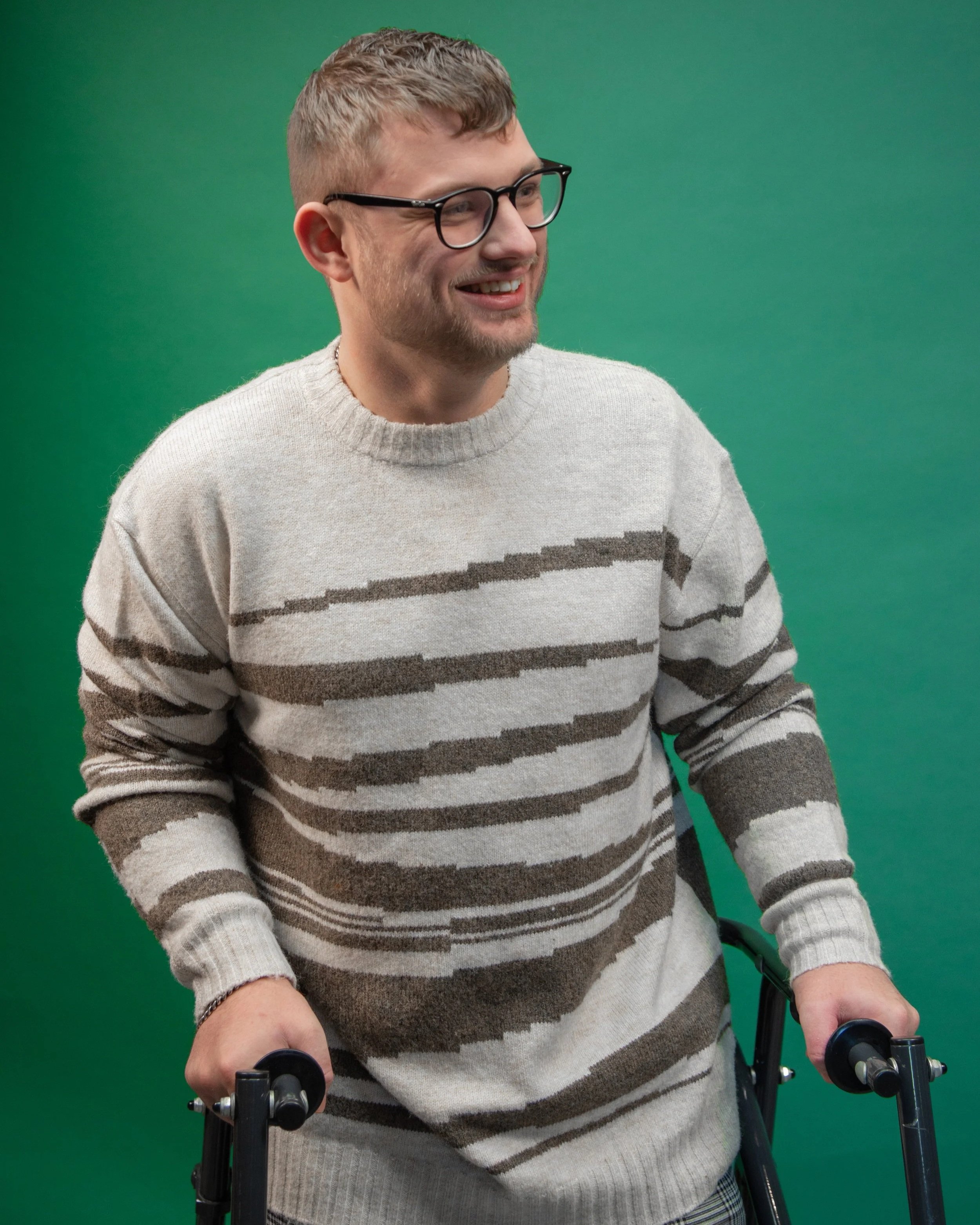
Alex is stood in his black walking frame, looking to the side and smiling.
Claudia: How would you describe the content you make with Sticks and Copper?
Alex: I’d say it’s realistic, it’s jovial, and it’s us. It’s activism, but quietly so. I like the idea that people don’t expect me to be out and about, doing creative work, to be engaged, or building something successful and meaningful. We want to challenge those assumptions.
Claudia: What misconceptions do you face as a couple?
Alex: People certainly don't expect us to be engaged. We tell this story about Chloe and me going on a day trip to one of her local castles. I gave her a quick kiss while we were waiting for one of my in-laws, and we got scoffed at. I confronted the woman, and she said, "Oh, I thought you were siblings.” And I corrected her, "No, that’s my missus." And she said, "Oh, is that possible?”
Another time we were in Camden, and this bloke stopped me, and I thought he said: “What do you do?” So, because I had just finished in Cardiff, I started telling him about Radio Wales. The week before, I was interviewing Brendon O'Carroll. So I was sitting there telling him about how I met the bloke from Mrs Brown's Boys. Chloe's just laughing, and I'm like, "What are you laughing about?” He walks off, and she goes, "He didn't ask you about work, Alex! He asked you what's wrong with you!”
Claudia: That’s absolutely hilarious. It’s unbelievable how much people ask, “What’s wrong with you?” without realising it’s such an offensive thing to say.
Why is it important to you to have agencies like With Not For?
Alex: Because disabled people need advocates who understand the value of our work. Kelly and Emma can show people what I can do and what we can do. We’re worth funding; we’re worth investing in. Whether it's writers on screen talent or people behind the scenes, we are worth putting money behind.
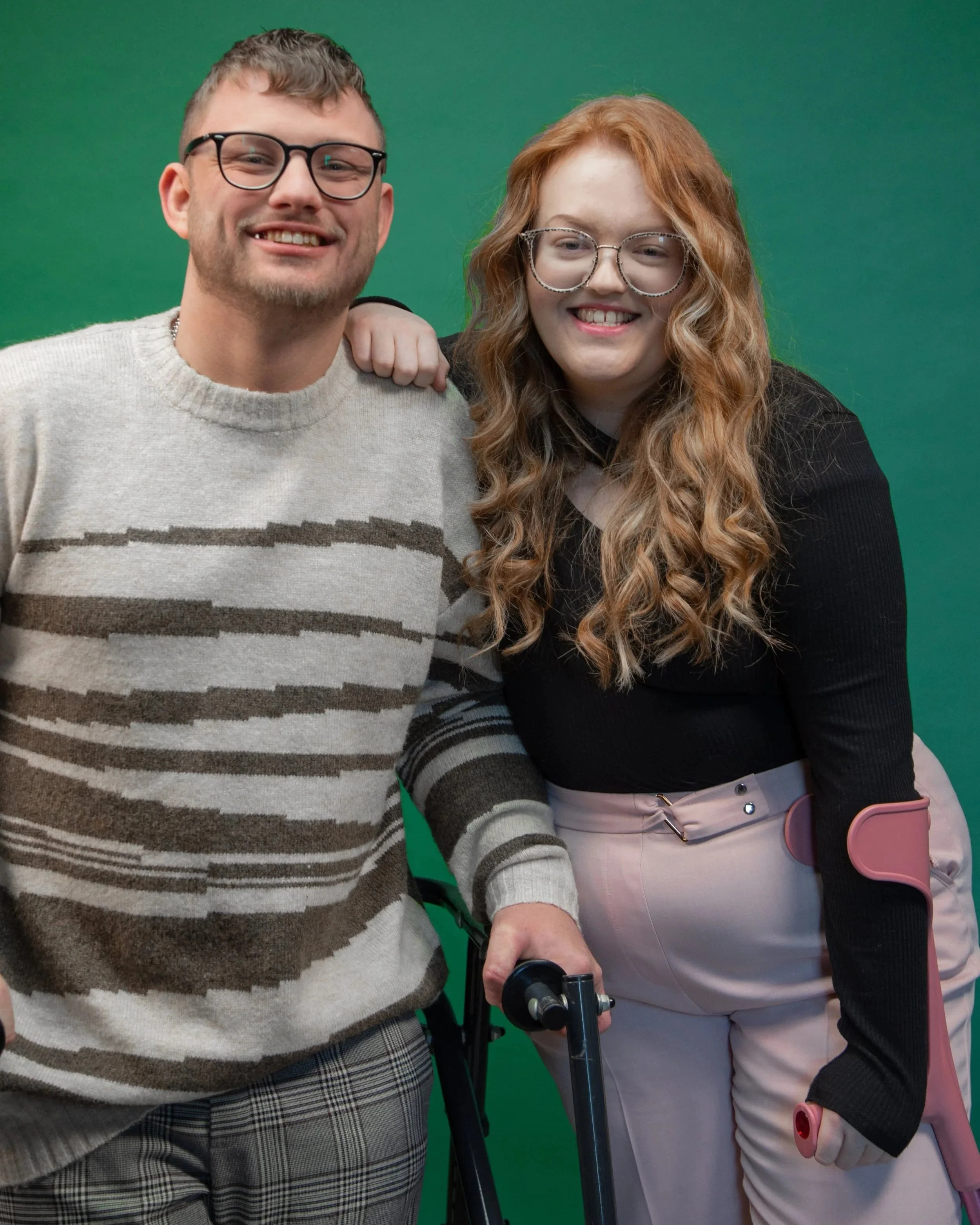
Alex is stood in his walking frame next to his fiancé Chloe. Chloe is a white woman with long ginger hair. She wears a black top and pink trousers that match her pink crutch. They are both smiling.
Claudia: Finally, what’s life like outside of work?
Alex: Chloe and I now live just outside Brighton. We’ve got a disabled-friendly flat, we’ve adopted a cat, and we’re engaged, so things are good. Brighton suits me because it’s very creative and open, and everyone seems to have a side project. It’s always “Oh, I’m a barista, but I also do stand-up comedy on the weekend.” Which makes me feel a bit less odd.
Claudia: Thanks so much, Alex. It was lovely meeting you and your wonderful missus. I can’t wait for the wedding!
Claudia Rose Walder Martinez is a multidisciplinary creative whose work spans art, fashion, literature, print and digital media. She is the Founder and Editor-In-Chief of Able Zine, a publication and platform dedicated to promoting disability arts, culture, and representation.
Image credits: Photography, Mathushaa Sagthidas. Makeup, Aster Rose.