The Stories In The Room
An event platforming Disabled voices, delivered in partnership with the APA.
On the 2nd June, APA and With Not For presented The Stories In The Room, a collaborative event asking the powerful question: whose voices are represented in the storytelling of advertising? The event brought together industry experts to explore how advertising and media stakeholders can drive real progress in disability equity and representation. With Not For also curated an incredible line-up of speakers to bring real, authentic stories into the room, each lending a unique thread to the day's narrative. The event culminated in an emotive live performance from artist MIRI, and ample time for networking.
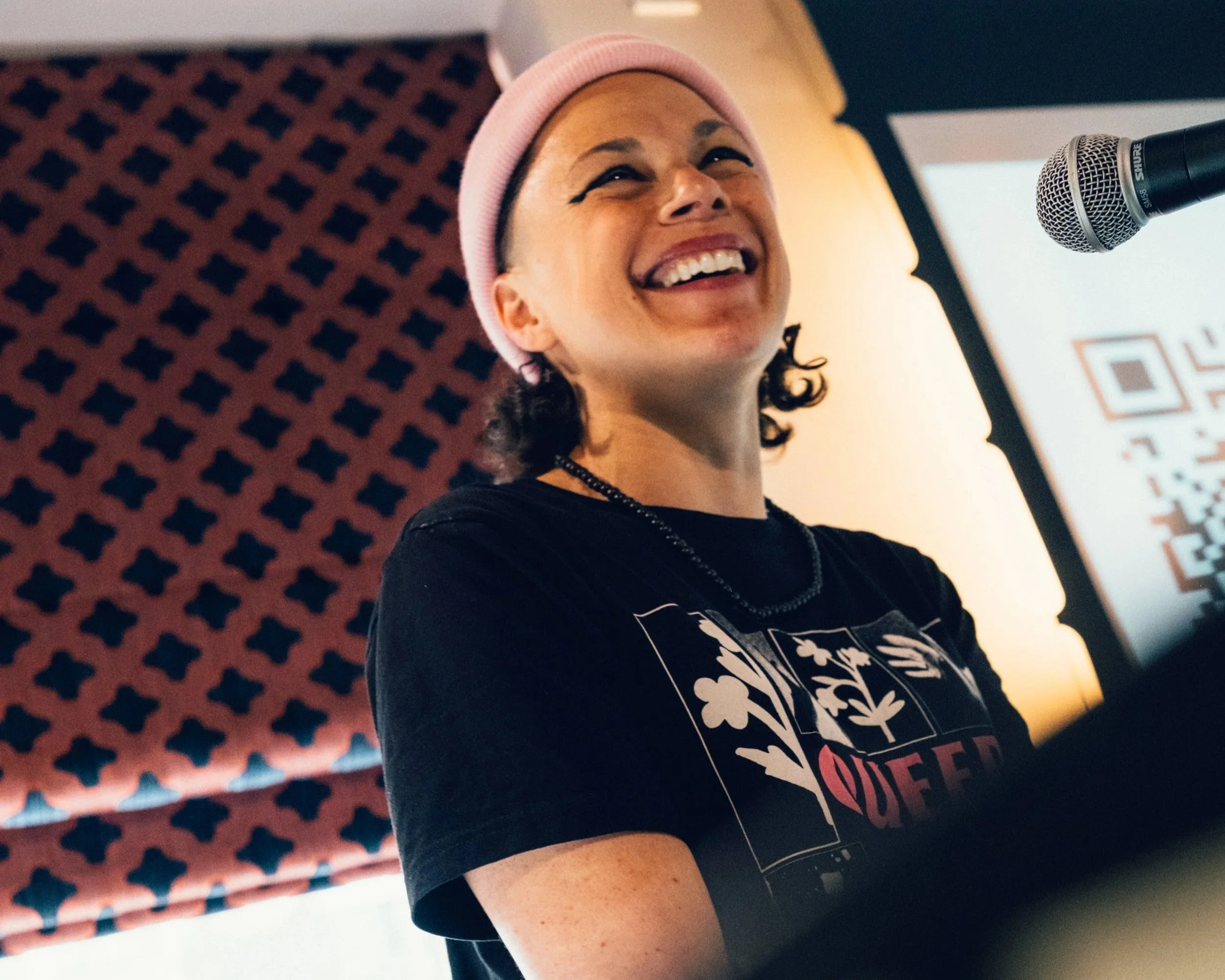
Live performer MIRI, smiling in front of a microphone on a stand. She is a white woman wearing a pink beanie with brown curly hair.
The event was hosted by Moeed Majeed at the Groucho Club, an infamous private members' club in the heart of Soho. Known for its historical legacy as a meeting place for creative minds and cultural movers and shakers, it was the perfect backdrop for the event. Special attention was paid to accessibility, ensuring wheelchair users could move freely throughout the space. Two sign language interpreters were present, and live captioning was available throughout the talks. Even the mixture of seating available made the event more comfortable for those with pain and other considerations.
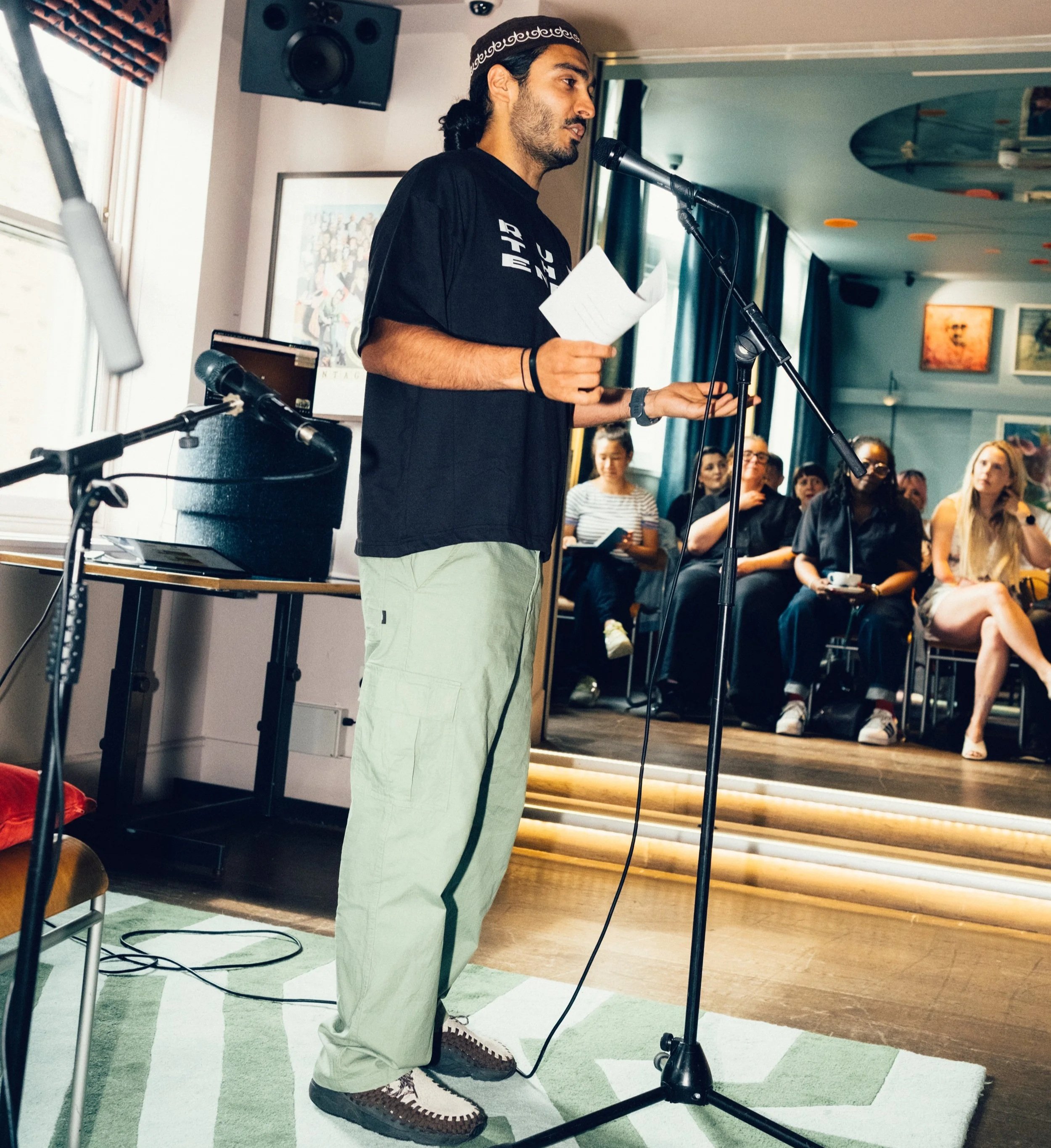
Host Moeed in mid flow, speaking to the audience. He’s a brown man with dark hair, tied back. He’s wearing a black hat, t.shirt and pale green trousers.
The first speakers to grace the stage were Brooke Millhouse, Priya Rekhi-Smith and Chris Baker, each bringing their unique lens of lived experience. Brooke Millhouse is the founder and host of the Disabled & Proud podcast, an adaptive athlete, advocate and speaker. Her talk demonstrated how the dehumanisation and medicalisation of disabled people, even from early adolescence, can leave a mark on our impressions of self-worth and belonging. She recalled being labelled as a “hazard” as a child and how her disability meant her body was treated as “unfinished business” rather than human and whole. She implored the audience to “allow disabled people to be complex”, embracing all the characteristics, skills and interests of disabled people that make us individual and unique beyond the scope of our disability.
Priya’s talk brought to light the cultural stigma of unseen disabilities within the south east asian community. She outlined the gaslighting she experienced coming into her diagnosis of deafness, and how each person's experience of deafness can affect their proximity to Deaf culture. As a brand storyteller, project director and creative producer with 15 years’ experience, her creative background led her to develop her own outlet for championing disabled stories under Not Your Monolith.
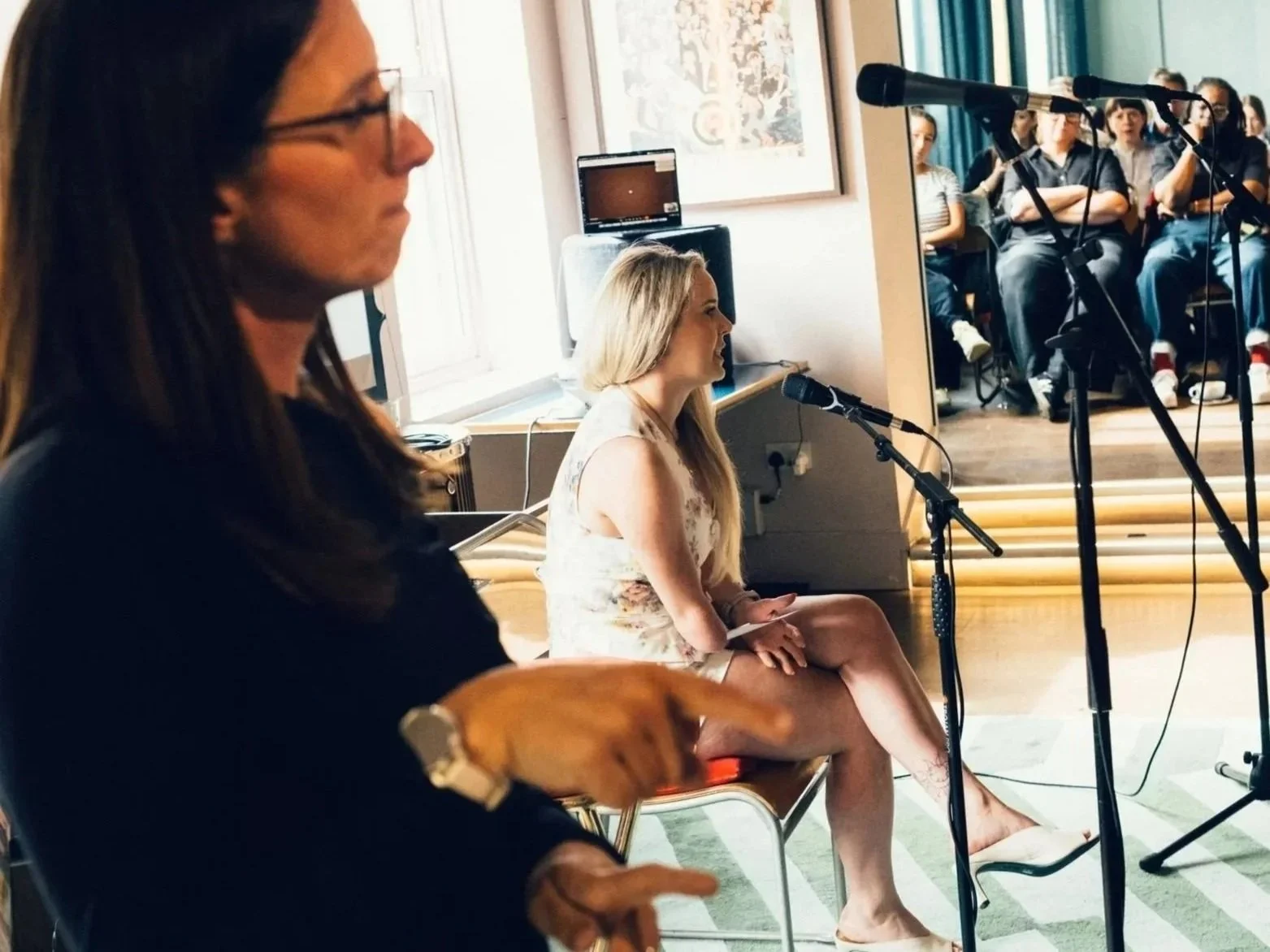
Brooke is sat on a chair as she tells her story. She’s a white woman with long blonde hair and upper limb difference.
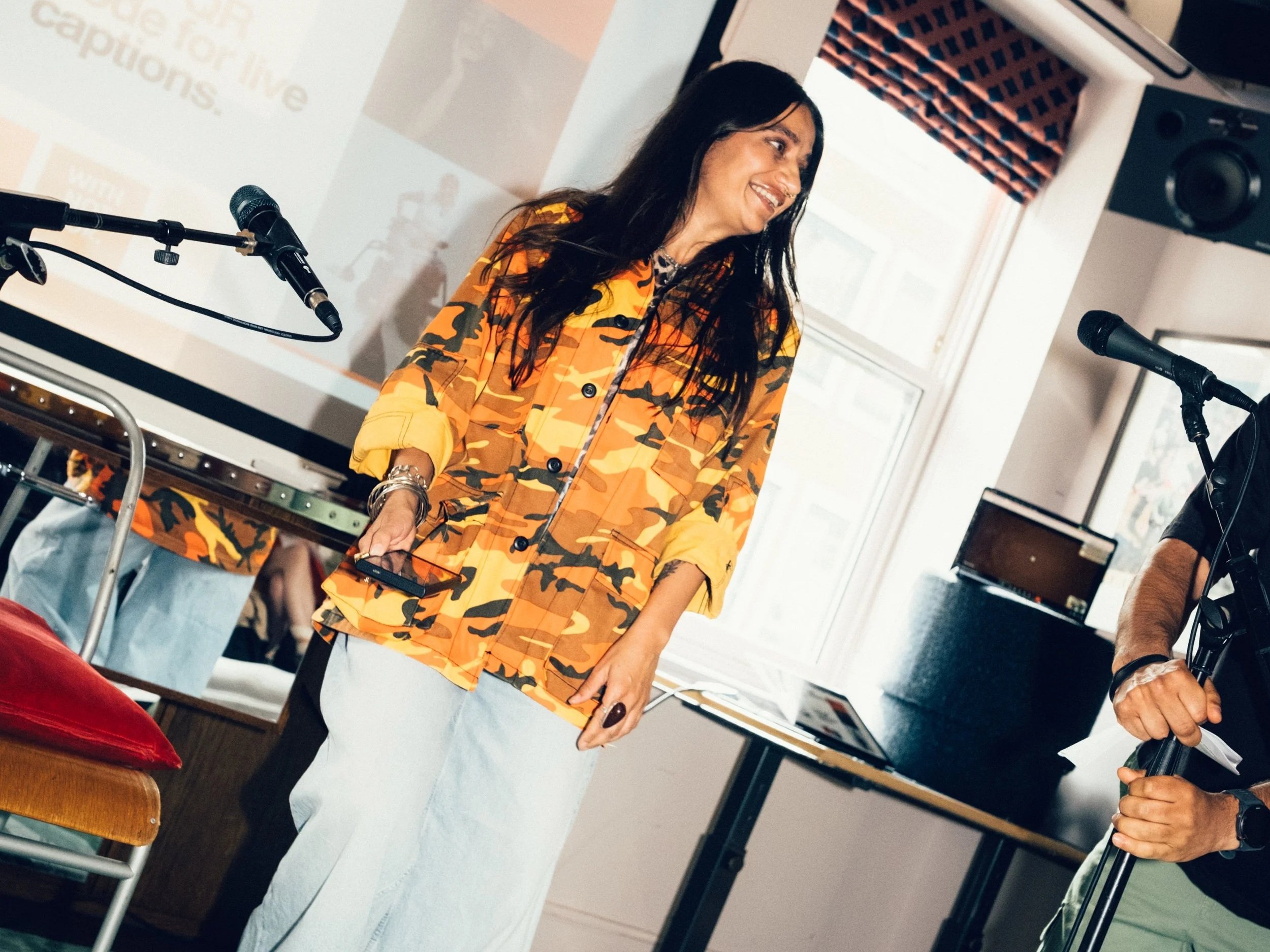
Priya is a brown woman with long dark hair. She’s stood, about to tell her story, smiling to someone on her left.
Chris Baker is a model, actor and co-founder of Aspire2Change. His talk investigated the internal self-talk and imposter syndrome felt by not only disabled people but all people of marginalised backgrounds when it comes to being in rooms we’ve not historically been a part of. Chris’s early experiences of poverty, class separation and the criminal justice system meant “judgements and presumptions” defined who he felt he could be. He talked about how his background and appearance meant he had an internal voice in his head that told him what to do and how to behave. Contending with imposter syndrome became about embodying confidence across all aspects of his identity and giving himself permission to belong, rather than needing it from others.
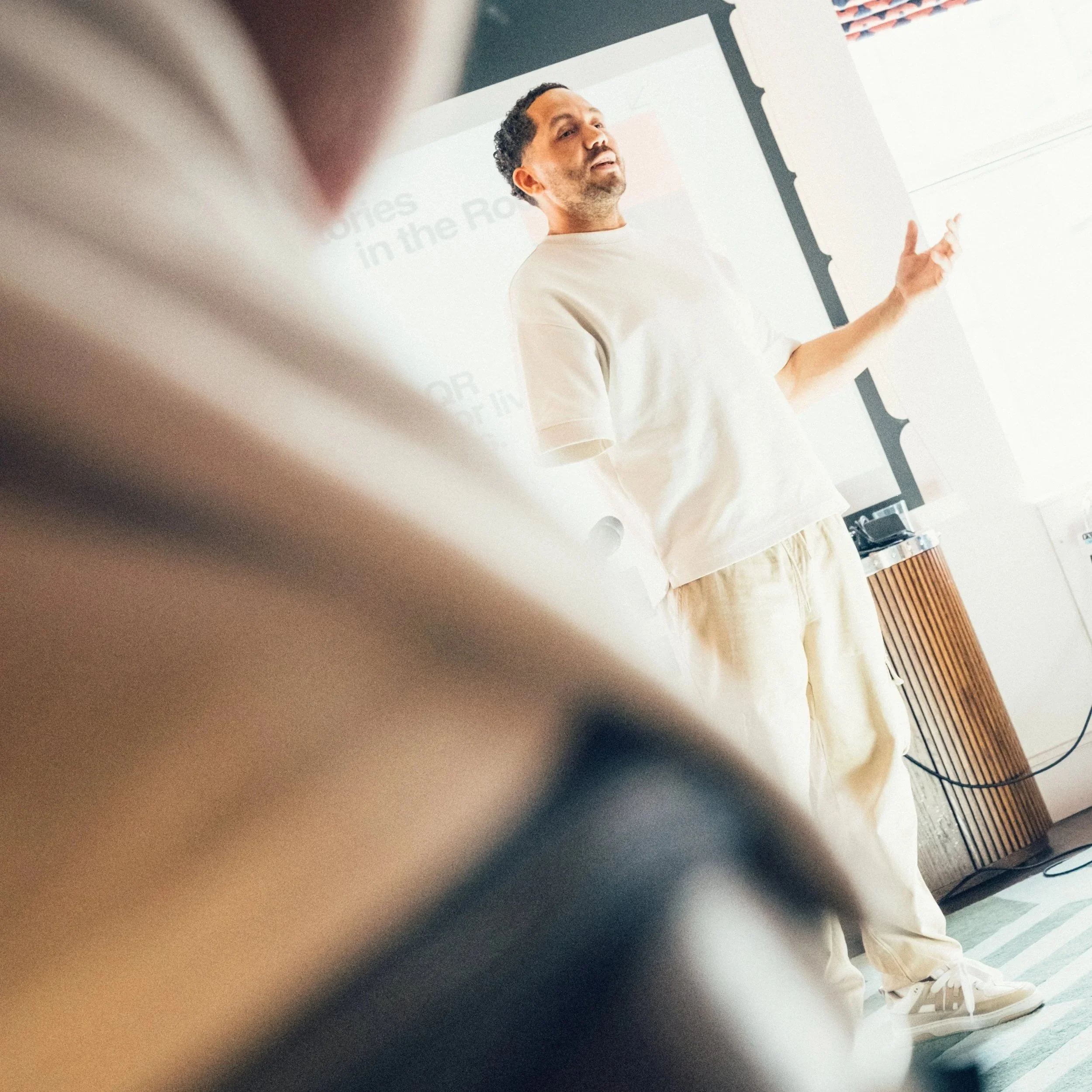
Chris is sharing his story, stood facing the audience. He is a man with mixed heritage with upper limb difference. He has short dark hair, wearing a light t.shirt and cream trousers.
After a brief interlude, WNF founders Kelly Gordon and Emma Gardner introduced the panel of industry speakers. The experts included Grace Parker, Operations Director at Havas Play; Charlotte Kirk, Producer at BBH; Fiona Bamford-Phillips, Director of Production at Prettybird; and Thom Hammond, Casting Director at Hammond Cox Casting. Kicking us off with the question “What are the reasons for a lack of disability inclusion in advertising?” The panellists noted that there is still concern about getting it wrong or appearing performative. As well as lacking the know-how to make good inclusion look “incidental” and part of everyday life.
While the answer to those questions isn’t complicated, Thom Hammond explained that “casting briefs come in pretty fully formed. It’s difficult to push back against that.” Another excellent and often overlooked point is that the “furious pace” of casting and production leads to an “exclusivity of inclusivity” because processes are not designed to be ethical and accessible for different bodyminds.
What was clear from Thom is that progress is being made, and looking at racial inclusion as an example, the progress over the past 20 years is significant. However, the difficulty casting directors face is that diversity is more than disability; it’s age, gender, size, and beyond, and there is always a risk that it becomes an exercise in tick-box inclusion. But he also acknowledged that more can still be done to encourage representation that doesn’t exclude disabled people.
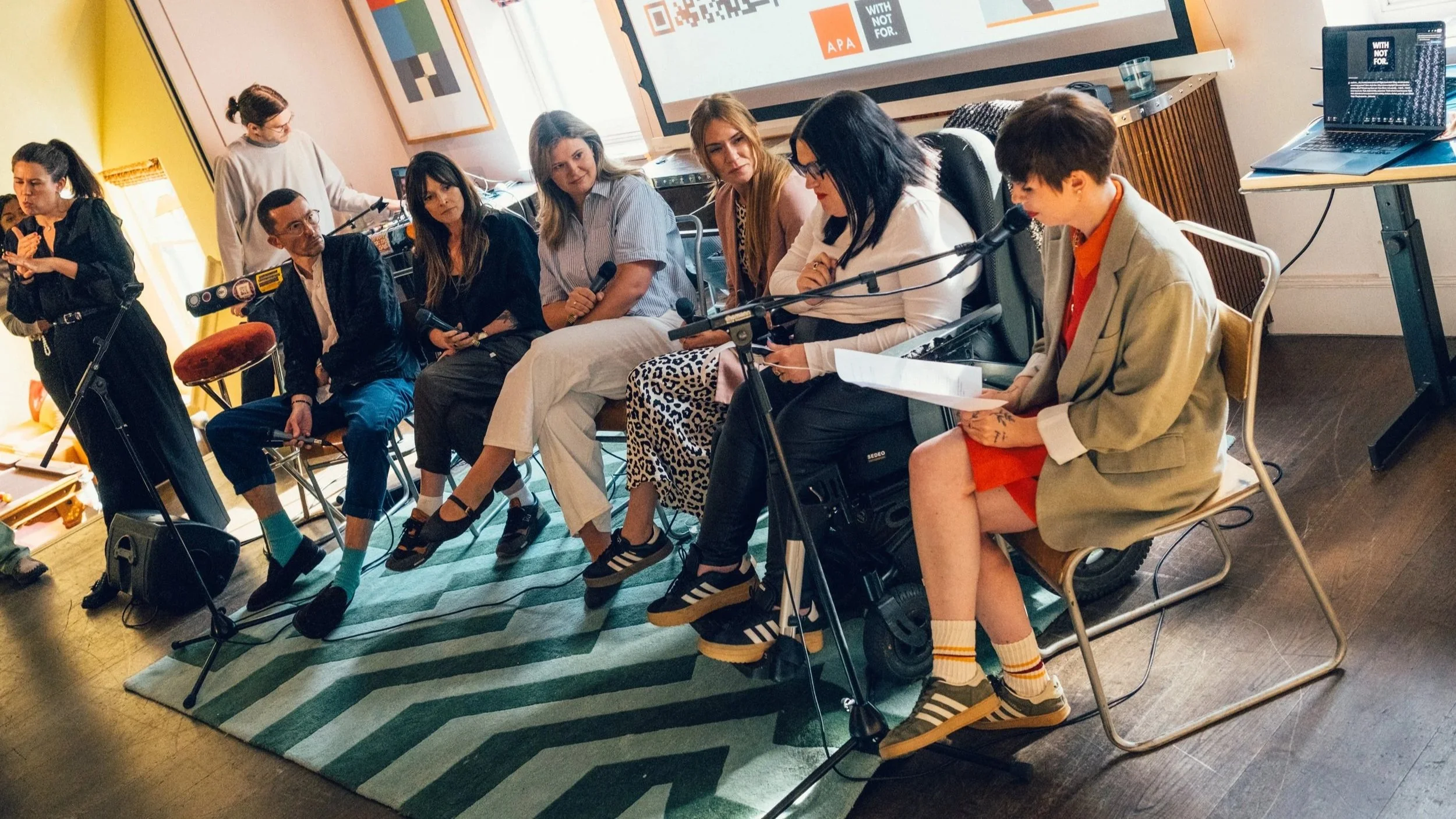
The panellists listen to Kelly as she opens the discussion on disability representation. They are all sat in a semi circle facing the audience, holding or positioned in front of microphones.
So, what are the solutions to improving the inclusion process and advertising outcomes? The panel agreed that a large focus needs to shift from representation to internal recruitment, improving access to disabled knowledge and talent from ”the centre of the system”. Another panellist acknowledged how “amazing work must come from the conception of the idea”, something that fails without input from disabled people and organisations. Best-in-class adverts from Tesco, Channel 4, and ‘Assume That I Can’ by Coordown were cited as prime examples of disability done right. Grace Parker also mentioned the work of Employee Resource Groups, such as ‘Adapt’ at Havas Play. The benefit of working with disability ERGs in-house is learning how to tailor spaces and make simple changes to foster inclusion within our organisations.
Wrapping up the day's talks were the final speakers, Emma Lines and Harper Roberts. Harper Roberts is a model, writer and mental health and disability inclusion advocate. Harper described how a history of abuse and illness can lead to a life of suffering and internalisation. Their talk was a powerful and poetic exploration of evolving out of adversity into authenticity. Harper’s authenticity is in embracing their life as a queer disabled person, emerging from the darkness into the light of true self-acceptance.
Emma Lines is regarded as the UK’s #1 wheelchair model, whose work with Marks & Spencer, Next, and Primark has finally brought wheelchair representation to the British high street. Outlining her unconventional journey into modelling, Emma was able to describe how life can actually get bigger and better as a result of disability, in spite of tropes that frame disability and illness as tragic. Emma’s story challenges both overt and unconscious ableism, and her visibility is proof of the real power of representation.
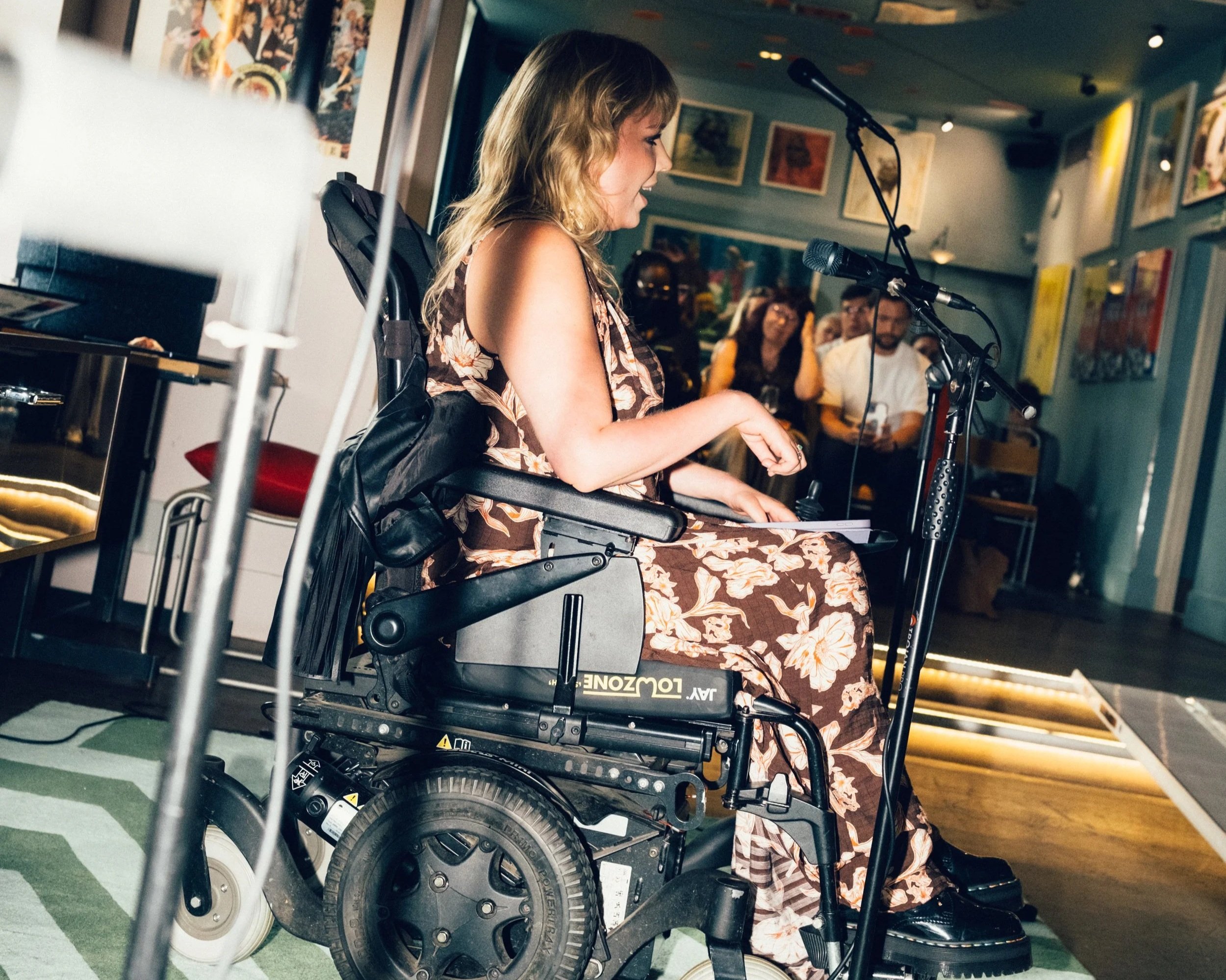
Emma is sat in her power wheelchair sharing her story. She is a white woman with blonde hair, wearing a brown patterned long dress and black shoes.
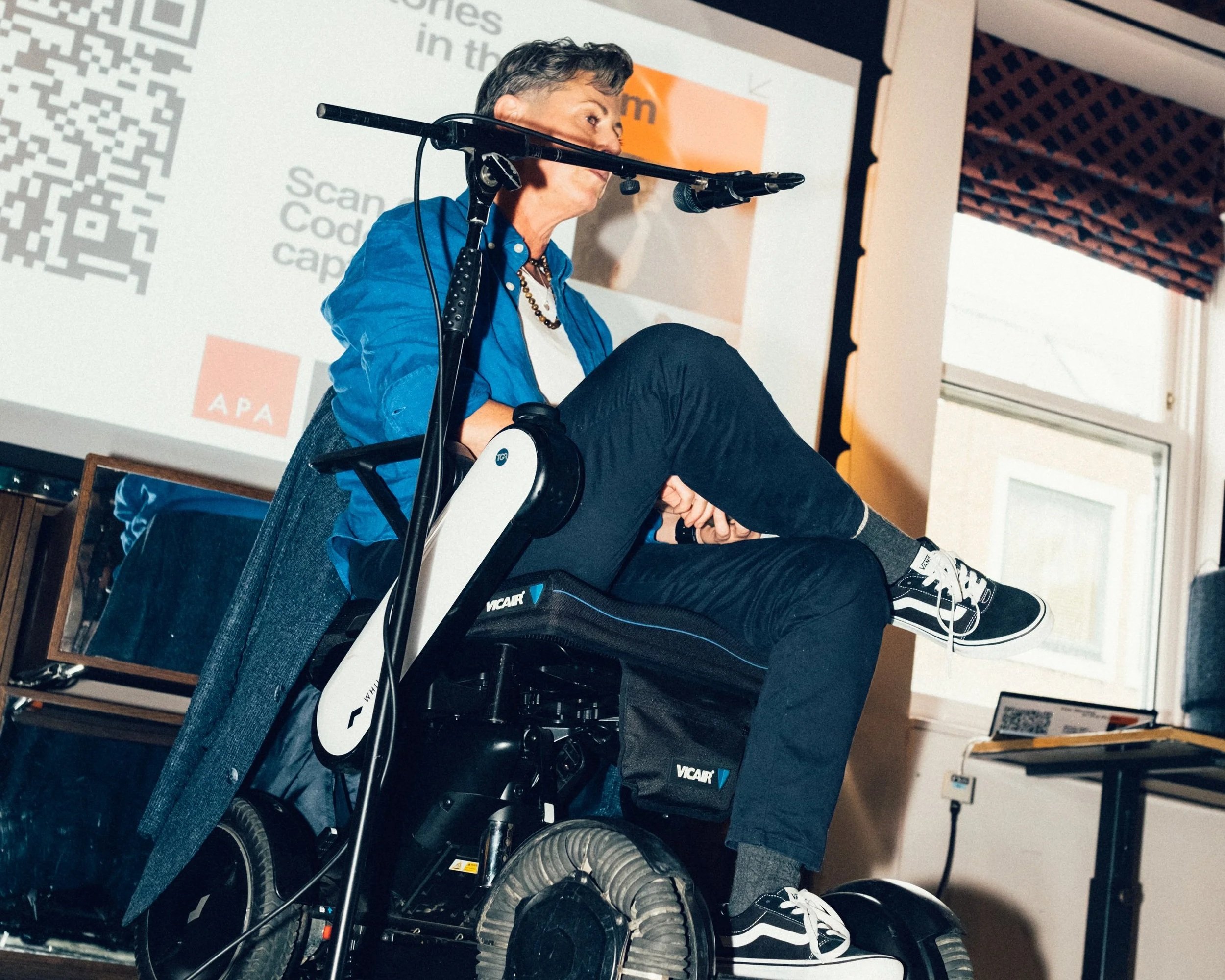
Harper is sat in their wheelchair with one of their legs crossed over the other. They are a white person with silver short hair, wearing a blue shirt over a white t.shirt and jeans.
The event culminated in a live performance by ‘artivist’ singer-songwriter and musician MIRI. MIRI played two songs, Good Ones and Electric Vibes, before finishing the set with a powerful cover of Girls Just Want To Have Fun, which she dedicated to Bibaa Henry, Nicole Smallman, Zara Alena, Sarah Everard and women whose lives have been lost to male violence in recent years. Her resonant vocals left the audience on a musical note of inspiration before the evening's networking.
The variety of speakers, topics and representation made it an unforgettable and (at times) emotional event, with audience members commenting on how good it felt to see so many wheelchair users in the room, or to feel the stage presence and power of storytellers they could relate to. A special thanks to all the guests, speakers, access workers, staff of the Groucho Club, the APA and Charlotte Fraser, Head of DEI at APA, who made the event one to remember.
Article written by Claudia Rose Walder. Photography by Alexander Thomas.
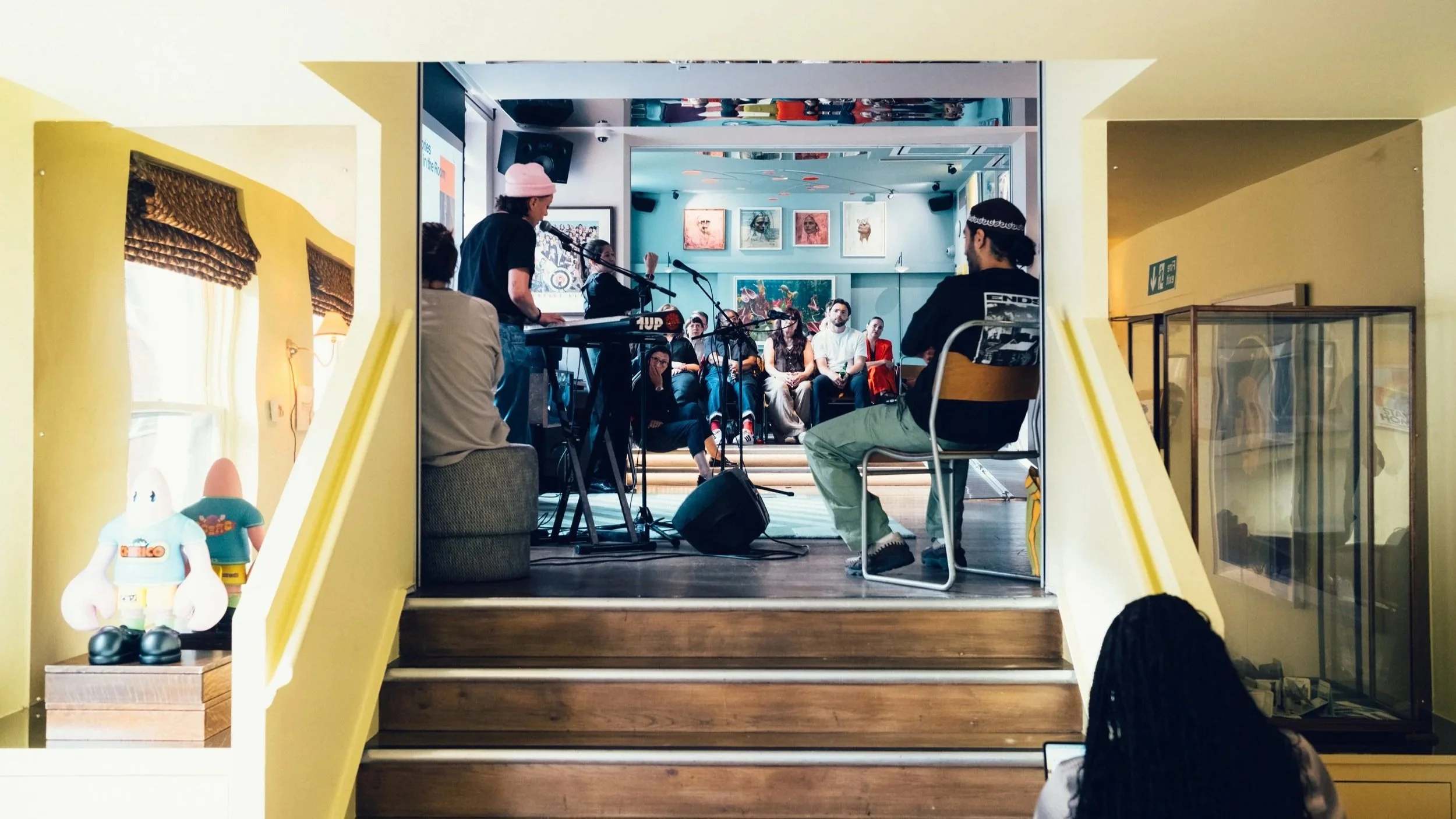
MIRI is stood a her keyboard, performing for the audience as they list intently. A BSL interpreter is performing the song to her left.