Get to Know: amanprit arnold
A blog series by Claudia rose Walder
With Not For are proud to represent some of the best diverse and disabled talent in the UK. We are excited to bring you the next instalment of ‘Get To Know’, our monthly spotlight initiative to help platform the people we represent and introduce you to their unique stories. Leading the series is Claudia Rose Walder, founder of Able Zine and curator of all things related to disability culture. To celebrate National BSL Day, this month, she speaks to Amanprit Arnold.
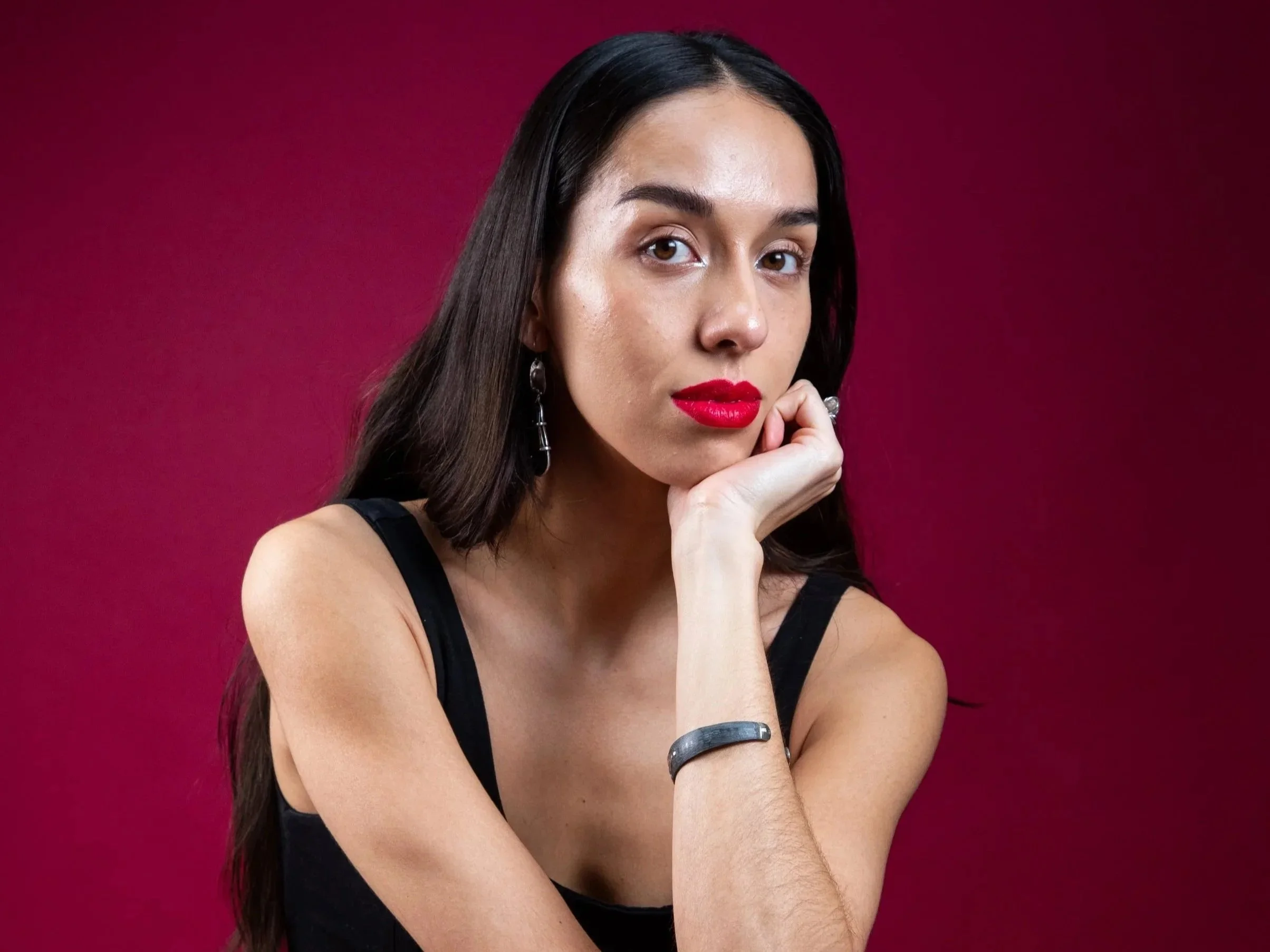
Claudia is latinx with long dark hair parted in the middle. She looks at the camera with her chin resting on her hand, wearing bright red lipstick against as red background.
About Amanprit
Amanprit is a disability urban strategist, renowned for her expertise and commitment to creating accessible and inclusive environments. She is the founder of Disability Urbanism and DeafCity Hub, where she campaigns for a groundbreaking cultural hub that empowers the Deaf community. As a Deaf urban strategist, Amanprit combines her lived experience with professional know-how to improve urban strategy, city planning, development, and research. Amanprit is also the Chair of UK deaf health charity SignHealth and the former GLA Co-Chair of the Disability Network.
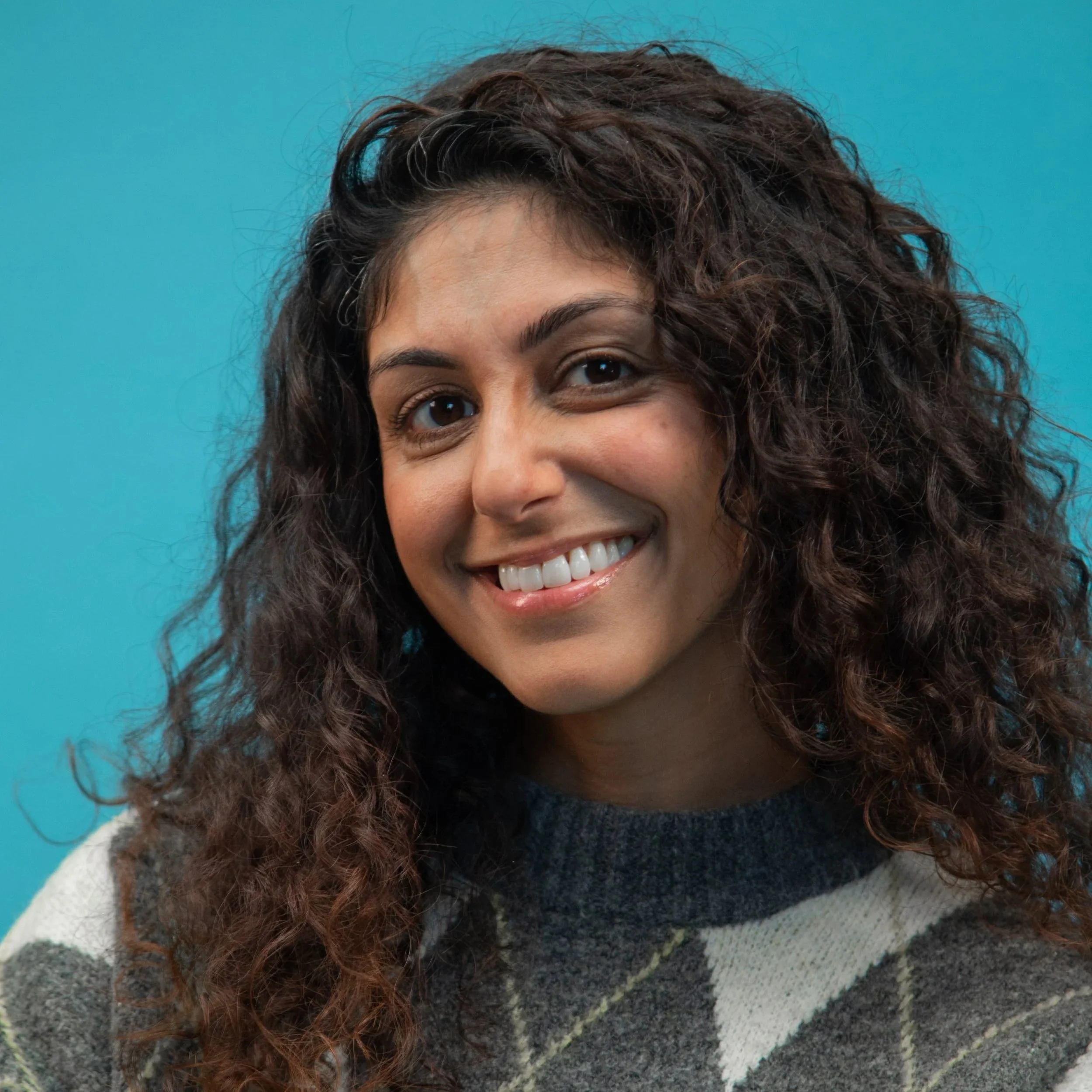
Amanprit is a brown, Deaf woman with long brown curly hair. She is smiling, looking at the camera in front of a blue backdrop. She wears a grey patterned knitted jumper.
Claudia: Hi Amanprit, it’s a pleasure to meet you! I’m so excited to hear about your story. Let’s start with an icebreaker first. Describe yourself in three words.
Amanprit: I’d describe myself as visionary, driven and resilient.
Claudia: What do the With Not For readers need to know about you?
Amanprit: I am a very proud Deaf person with a very strong Deaf identity, because without that positive identity, I don't think I would be where I am today. I work as a disability urban strategist, which means I bring disability inclusion to city-making, urban development, and placemaking. I use my expertise to speak up about what the built environment is missing. I think disabled people are really valuable because we identify barriers, provide solutions, and help people get creative and push boundaries. Often, the solutions we create actually benefit the mainstream, not just disabled people.
I'm also the chair of SignHealth, a charity that aims to address health inequalities for deaf people, as we can't access healthcare through the NHS in the same way that other people can, due to communication barriers. SignHealth promotes equitable access to healthcare and accessible information, and also provides services in BSL, including domestic abuse support, therapy, and advocacy. I'm really proud to be part of that organisation, because it's the largest employer of disabled people, with over 160 staff members, and 75% of its workforce are deaf, so it’s quite a unique BSL-first culture.
Claudia: Were you born deaf?
Amanprit: I was born profoundly deaf, but I wasn’t diagnosed until I was about 18 months old. There was a bit of a language delay, but my parents did a fantastic job trying to get me the support that I needed. I went to a mainstream school, which I struggled with because there was nobody else like me. I felt I stuck out like a sore thumb. But then I moved into a secondary boarding school for the deaf, and that was an amazing environment where everybody else was deaf, the classrooms were designed for me, and that helped me build my positive confidence as I entered the world of work. The world of work doesn't accommodate, and at first, you're just trying to figure out how to ask for accommodations. Then, over time, you learn to be more assertive about your own needs. It actually makes people respect you more if you’re really clear about what your needs are.
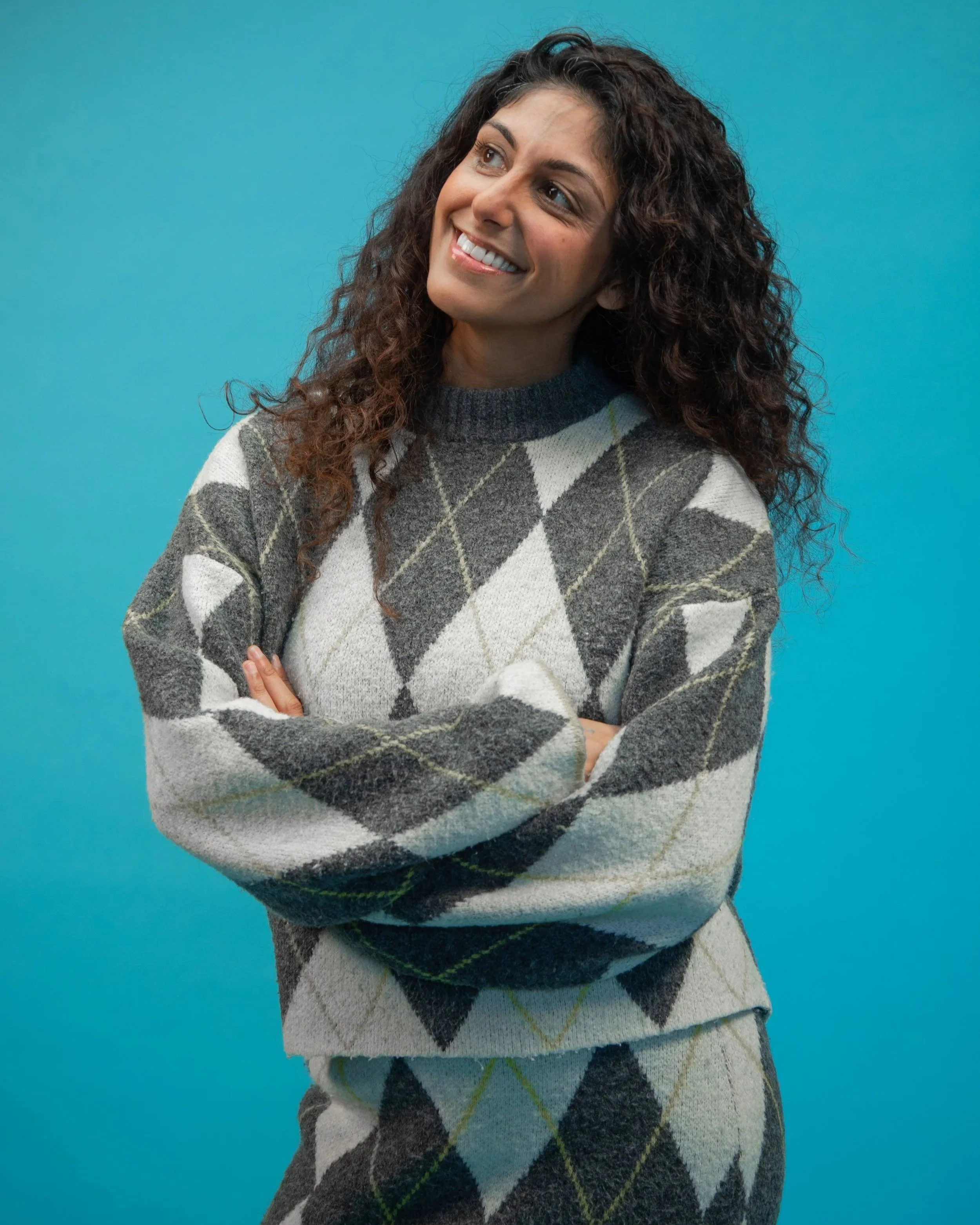
Amanprit is looking to the side smiling with her arms folded in front of her. She wears a grey knitted skirt that matches her jumper.
Urban Strategy
Claudia: How did you get into urban strategy?
Amanprit: I studied Urban Planning at university and worked in global organisations delivering city advisory and research programmes. My last job was at the Greater London Authority (GLA) through Public Practice, designed to build public sector capability to improve the quality, equality, and sustainability of places. It was there that I brought my full, authentic self, because it's about London for Londoners. I was co-chair of the Disability Network, and I worked with senior management, so there was room for me to voice my thoughts and be the go-to person on disability and access, whether it was embedding disability into policies, programmes, an advisory panel, or recruitment. It’s those things that actually make a big difference. I believe that if you can set the tone at the beginning, it paves the way for people to bring their lived and professional expertise together.
Claudia: What does a day in the life of an urban strategist look like?
Amanprit: There are a number of things that I do. One is raising awareness and being an activist and systems change-maker in the built environment sector. Through Disability Urbanism, I develop and deliver inclusive design strategy and operationalise it through governance, frameworks, policy, processes and tools.
I deliver training and awareness sessions to governments, institutions, and major organisations on disability and inclusive urban design. I advocate embedding inclusive design into strategy, as it sets the tone and foundation for development and helps future-proof places and spaces for an often-overlooked disabled demographic that is growing. It's a lot easier for new developments, where you've got a blank page in the built environment. Then I identify what the issues are and the solutions. Another key thing I do is communicate what is accessible and what is not. Just because the environment is inaccessible doesn't mean it has to be; there are ways to make it accessible, and the number one way is definitely through communication and technology. Technology is a really powerful tool.
Claudia: How does technology and accessibility impact you on a day-to-day basis?
Amanprit: Accessibility is key to everything that I do. For example, if I'm not able to understand someone, I can just get an interpreter on my phone, on demand. I have an interpreter for big meetings, events, or conferences. Having an interpreter gives me access to communication, content, and knowledge, and without that, I think I will be removed from society. Accessibility, including online team meetings with captions, subtitles on TV, and even on social media, allowed me to have equal access to information like anybody else.
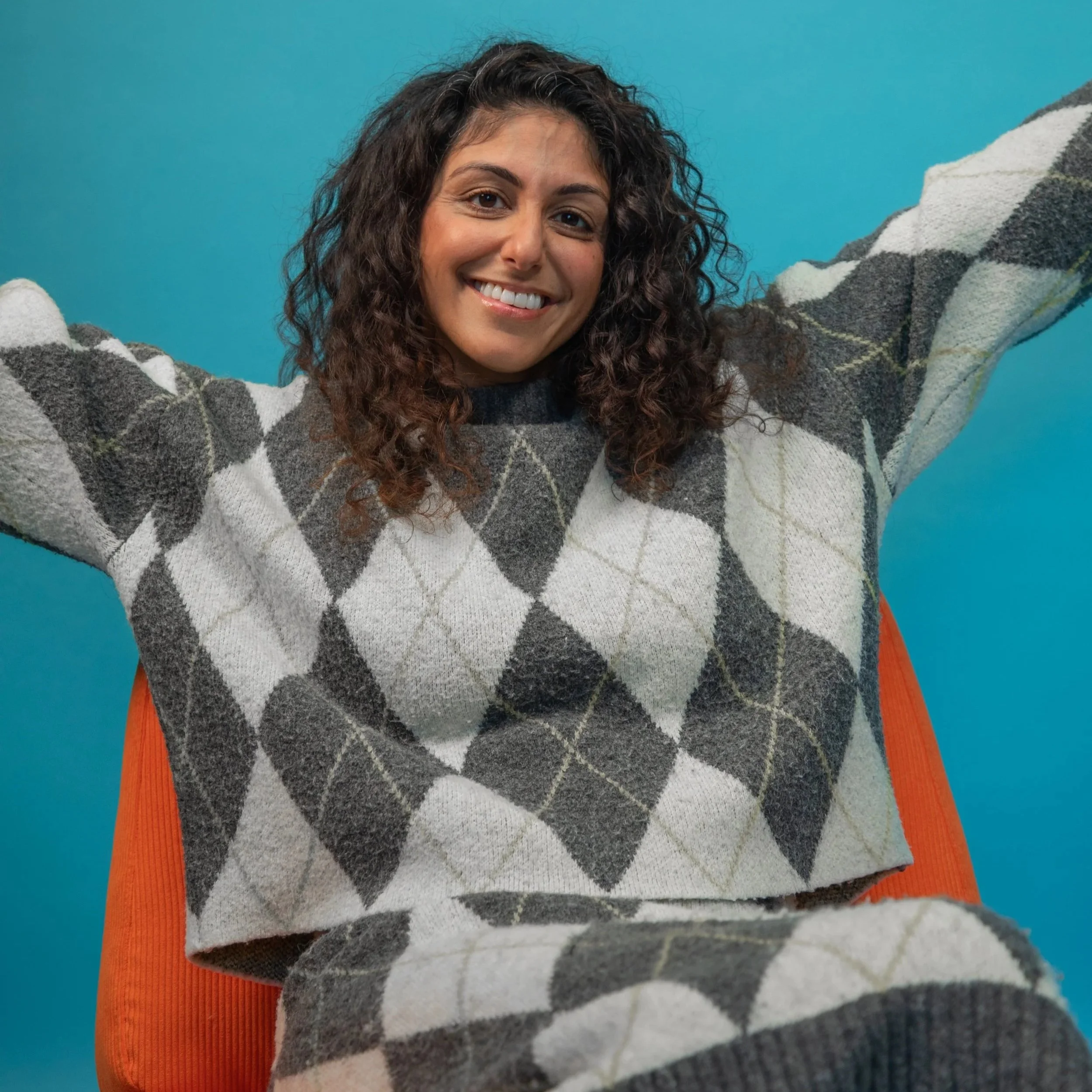
Amanprit is sitting on an orange retro chair with her arms stretched out to the sides as she smiles at the camera.
Claudia: What's one project or something in your career that you're most proud of so far?
Amanprit: I have been working on a project for the last three years, and it's called DeafCity Hub, which is a mixed-use space for D/deaf people, because I think it's shocking that London is a global city, and we still don't have one space of our own, an environment designed for us, where we feel culturally welcome. So I came up with that concept because I think that it is missing, and I'm on a campaign to really make it happen. All the D/deaf charities and organisations are fully supportive because they believe that someone who should do this should be deaf themselves and understand the community and its needs. And I also believe it would be a fantastic best-practice model for those in the built environment to learn what could be beneficial for them in their offices, retail, homes, restaurants or cafes.
Claudia: That's really cool. I'm excited to see it grow! How can people support your work?
Amanprit: For DeafCity Hub, follow me on LinkedIn. It would be fantastic to find a development partner with space who's willing to explore the concept with the Deaf community, because I don't think there's anything like it in the world.
Claudia: What do you wish more people knew about the Deaf community?
Amanprit: I wish people knew that the Deaf community is powerful and beautiful, with its own language, poetry, art and culture. It's wonderful to be in a pub with other Deaf people and laugh our heads off over an inside joke that we understand through sign language, one that can't be replicated in any other community or even in my own family. Here's another great way to put it: you go to another country to explore other people's culture, language and food. Deaf people don’t have our own country, but we have a big culture.
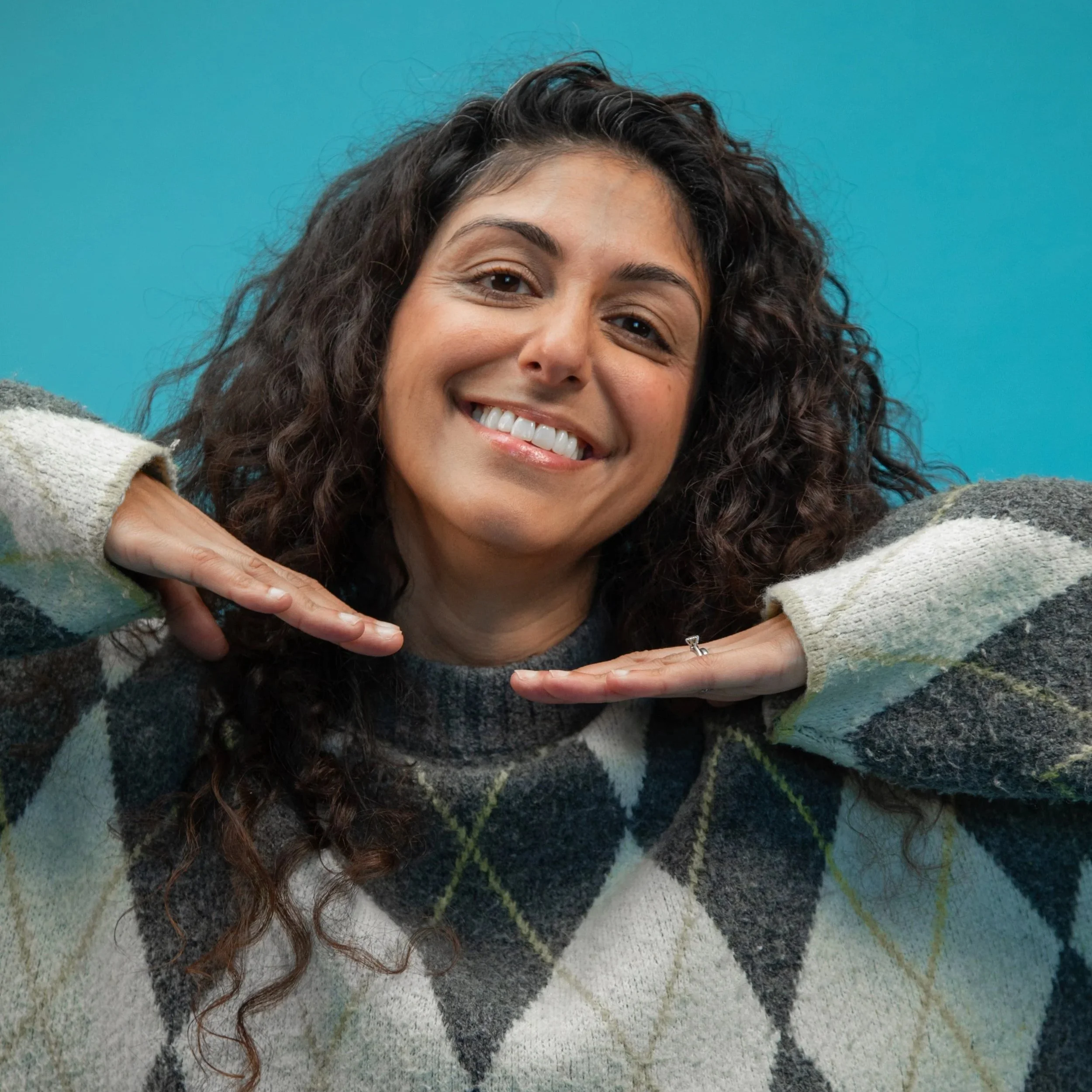
Amanprit is smiling widely with her hands placed under her chin and her elbows out to the sides.
Claudia: I feel, as a fellow disabled person, but who's hearing and sighted, that there's a big knowledge divide within the disability community and within the accessibility space as well. Access needs are a spectrum. But, as you said, it's the captions, it's the sign language, it's the digital tools for interpretation. It's a whole world, really. So people have to choose to invest in that world as they would invest in a country or in a culture. And I think not enough people do. That’s why representation can have a big impact. When there's no representation, people don't realise what that culture looks like and how many people are in it.
Claudia: What does it mean to you to be represented by With Not For?
Amanprit: It's fantastic to be represented by With Not For. When I met Kelly and Emma, I thought their mission was really clear. They know exactly how to represent disabled people, because Kelly is disabled herself. She knows it is really important and reflects meaningful representation. It's important to be working with organisations that want to showcase and represent disabled people, because it really does change attitudes. When Rose Ayling-Ellis competed on Strictly Come Dancing, it really shifted people's perceptions of what Deaf people can achieve and raised the profile of the Deaf community. So I think more representation in the media can only be a good thing.
Claudia: It’s been a pleasure, Amanprit. I can’t wait to see your next steps, and best of luck with DeafCity Hub!
Claudia Rose Walder Martinez is a multidisciplinary creative whose work spans art, fashion, literature, print and digital media. She is the Founder and Editor-In-Chief of Able Zine, a publication and platform dedicated to promoting disability arts, culture, and representation.
Image credits: Photography, Mathushaa Sagthidas. Makeup, Aster Rose.