Get to Know: shareena
A blog series by Claudia rose Walder
With Not For are proud to represent some of the best diverse and disabled talent in the UK. With so much new talent on our books, we are excited to launch the monthly spotlight initiative to help you discover everything they have to offer. One such talent is Claudia Rose Walder, founder of Able Zine, writer and curator of all things related to disability culture. Claudia will be leading our new interview series that will platform the people we represent, introducing you to their unique stories, professional achievements and exciting ambitions.
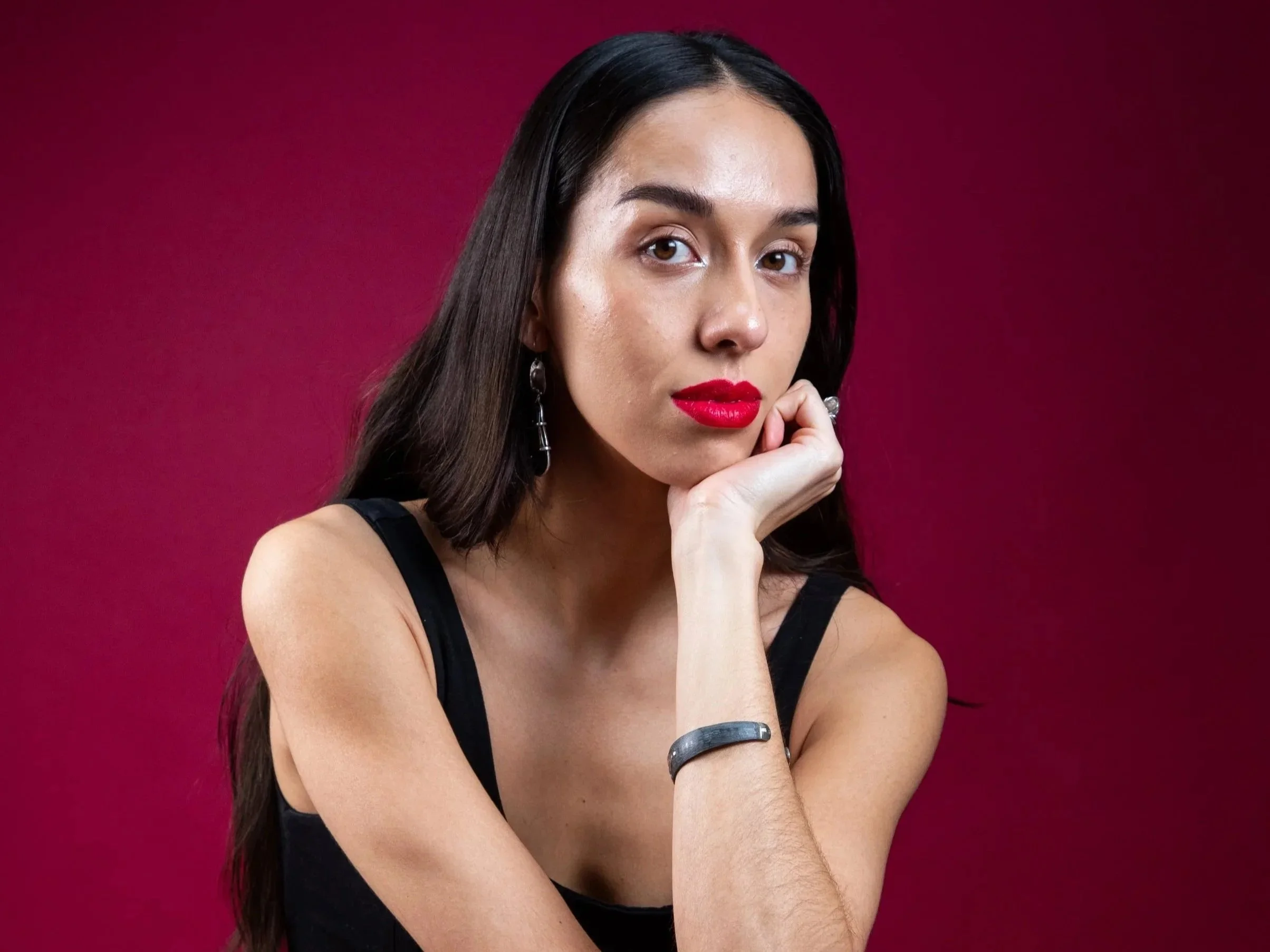
Claudia is latinx with long dark hair parted in the middle. She looks at the camera with her chin resting on her hand, wearing bright red lipstick against as red background.
First off in our spotlight series is Shareena Emambocus, fashion activist and entrepreneur. Shareena is a plus-size fashion maven with over 200k followers on Instagram and TikTok. She is the co-founder of Urban Finds, a new fashion marketplace for inclusive and accessible clothing. Like ASOS but better. As a plus-size Indo-Mauritian woman, Shareena craved better representation growing up, and now she embodies the leadership she needed to see; supporting others in her community to express themselves fully, breaking down barriers for all and living life unapologetically.
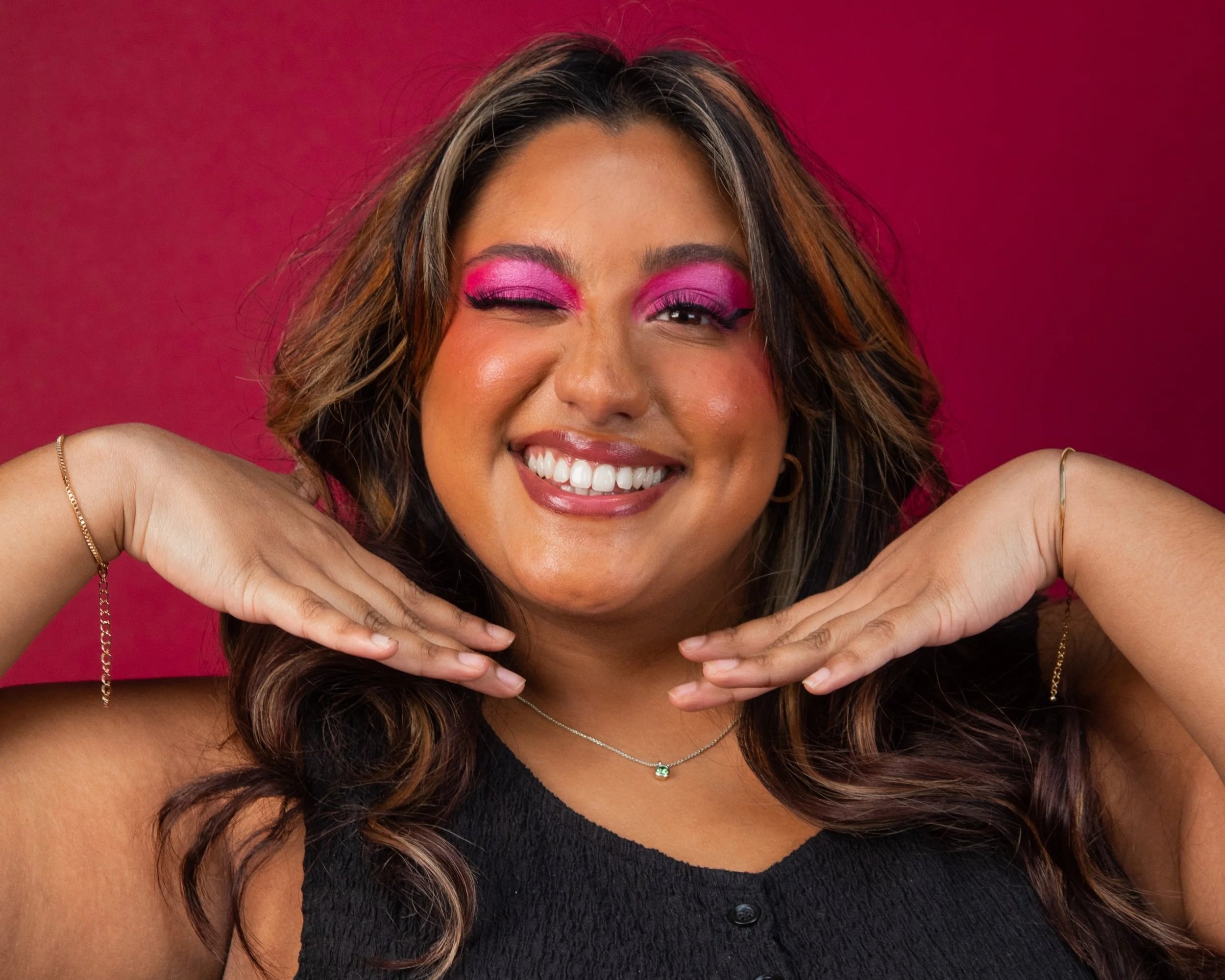
Shareena is a brown woman with long dark curly hair. Her eyeshadow is bright pink as she winks at the camera with her hands placed under her chin. She wears a black vest and silver necklace and is stood in front of a red background.
Claudia: Hey Shareena, it’s so nice to meet you! I’m looking forward to learning more about you. Here’s a quick icebreaker: describe yourself in 3 words.
Shareena: I would say chaotic, ambitious... but also a bit soft.
Claudia: I like that, softness is underrated. Can you tell us about your journey so far and how you got into fashion?
Shareena: I grew up in Scarborough, which is a little seaside town in Yorkshire. Since I was little, I've always wanted to be a lawyer. At school, I won a debate and got a trophy, and when I came home, my parents were like, “Lawyer, you want to be a lawyer.” So I spent my entire education working towards that. Typically, when I went to university to study law, I realised I didn't want to do law. My world came crashing down. I've always been a very creative person, and one thing I've always been really passionate about is activism. While studying law, I was really interested in social injustice, and so, by merging all my passions, came body inclusivity, activism, and fat girl activism.
Growing up in a plus-sized body, I had a strong passion for making fashion accessible to everyone. I started my social media whilst at university to document my journey as a plus-size model, and it blew up within 4 months of me starting. I've been so grateful for that journey, because it means I get to talk about fat phobia, help other people dismantle fat phobia within their lives, and empower people to express themselves however they want to. I then got into marketing through my knowledge of social media and taking courses, which is another creative skill I now have.
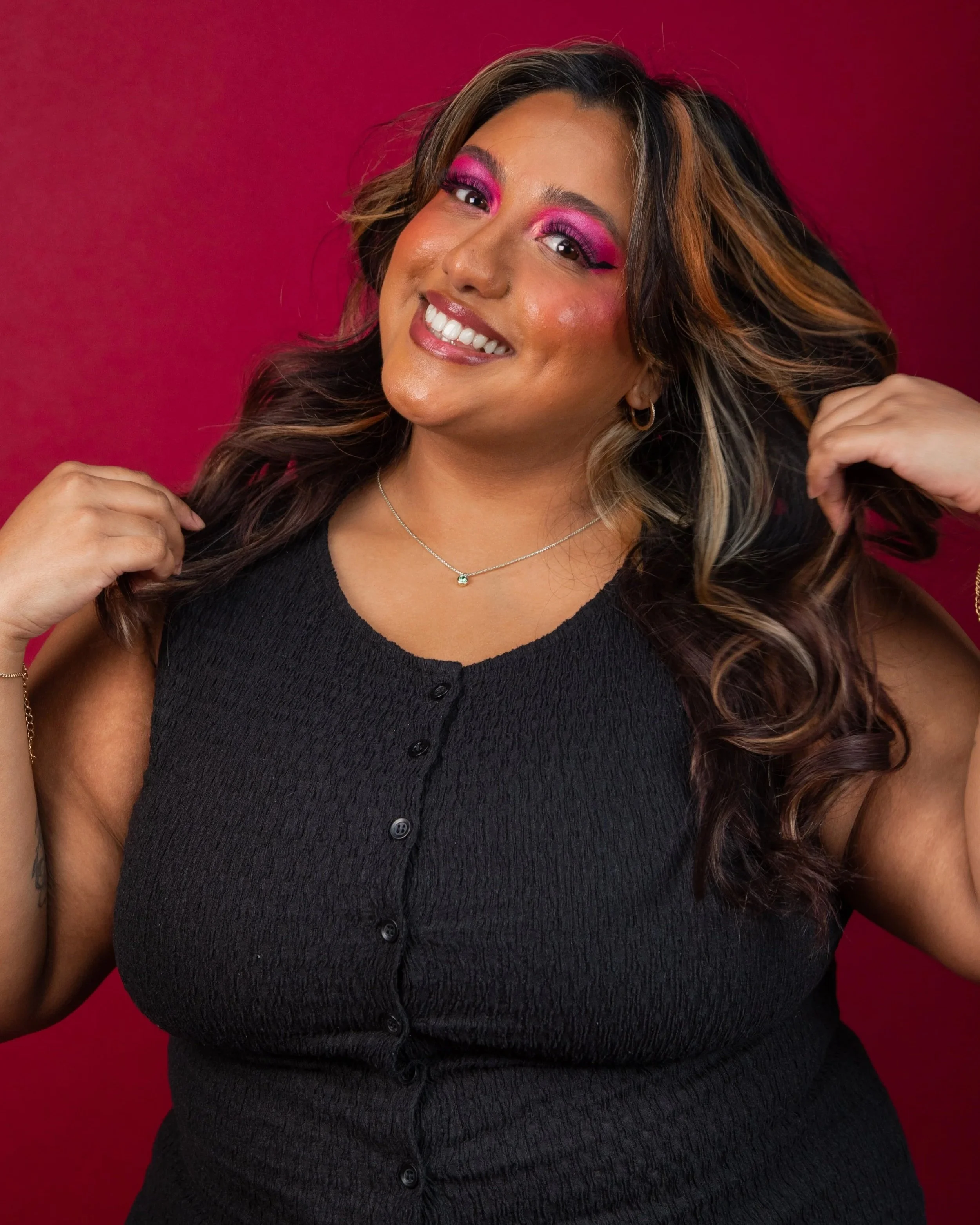
Another image from the same shoot - this time Shareena tilts her head to the side with her hands placed gently in her hair.
Claudia: With such a big following online, I’m curious to know how social media has impacted your life, and what your perspective is on it as a creator?
Shareena: When I was younger, I used to think, I wish my social media could just blow up so that I don't have to work. I felt a huge slap in the face when I realised it's a full-time job. It takes me three hours to edit one video. If I have to post seven videos a week, that's already 21 hours. Then you've got getting ready, taking pictures, editing pictures, and business admin when you're working with brands. It adds up, and suddenly I'm working 45 to 50 hours a week. It’s impacted my life a lot because I never thought I would be doing this as a job. But you can't half do social media. You have to commit to it, post regularly, stay relevant, and be consistent so it feels like you're juggling multiple pies.
I now have a lot more respect for creators who really nurture their audience, because I know from the other side of it how much time it takes. Curve creators, disabled creators, we've got more of a social responsibility to uplift and empower other people and be the representation we never had growing up. Before I gained a following, plus-size creators and neurodiverse creators impacted my life so much because I felt seen. Knowing that I can do that for other people feels amazing and is a huge privilege, but it also comes with a lot of pressure. You get imposter syndrome, and unlike in a workforce, we don't have an HR department or a manager to get advice from. You're your own boss, and sometimes you just have to take a shot in the dark and hope that you're doing the right thing. There are agencies out there that scam you and sell you this dream, and in reality, they just want a piece of your pie. Another thing I've learned is that it's not a lucrative industry to be in when you come from an underrepresented background, because if you don't fit the sample-size white creator mould, most brands just don't want to work with you. I had brands come back to me saying that they don't like the fact that I use the word “fat,” and it's too much for them. I'm too much for them. I'm not palatable enough as a plus-size creator. I think that's where developing Urban Finds and starting my business have been the focus for me, because, long-term, this isn't sustainable.
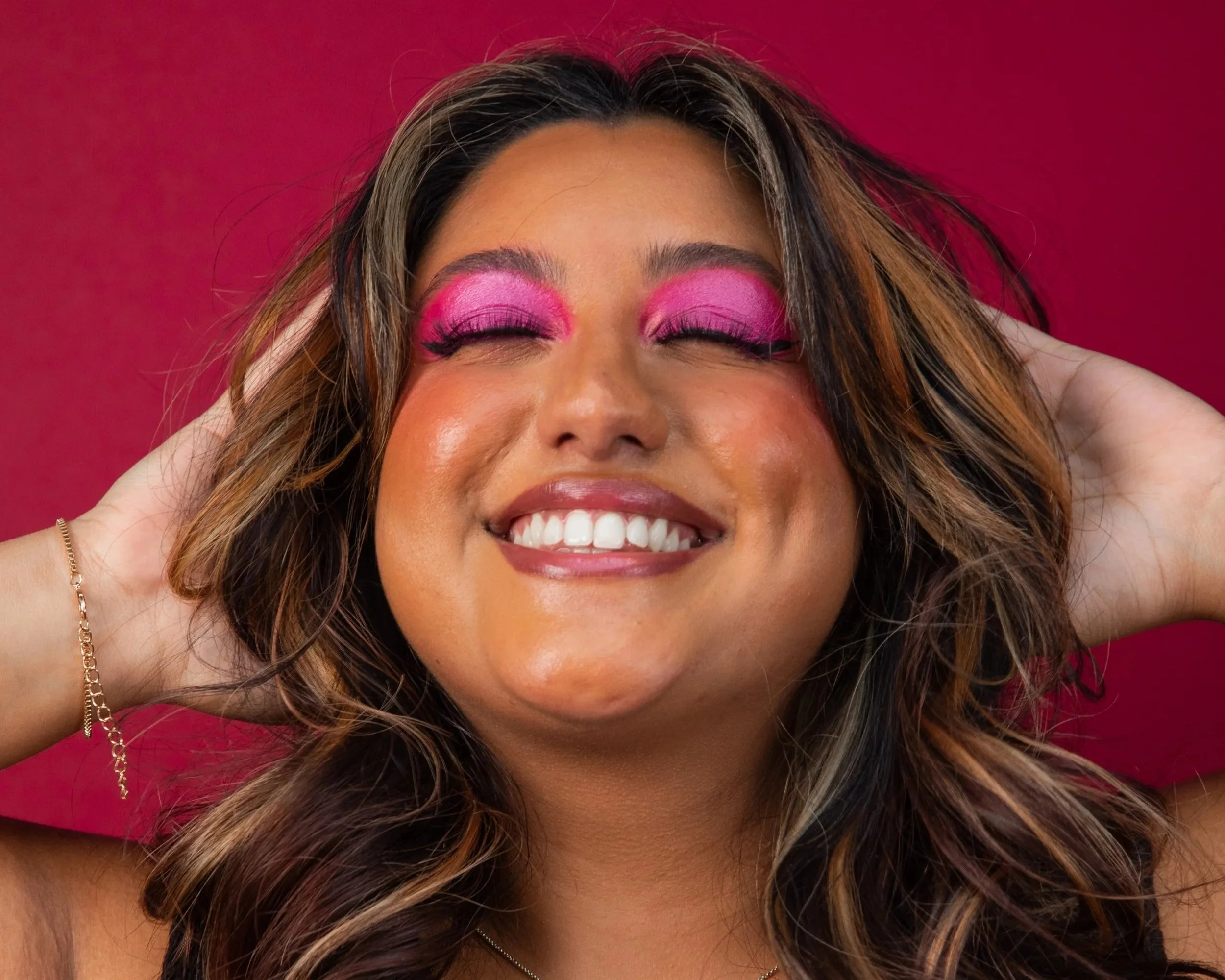
Shareena has her head tilted back slightly with her eyes closed and both hands behind her head.
Claudia: Can you tell us more about Urban Finds, and how did it start?
Shareena: Urban Finds is a fashion marketplace app I am developing with my business partner, Kiera, that will exclusively feature brands that cater to underrepresented markets, such as plus-size, adaptive, petite, tall, and modest or religiously motivated clothing, to make fashion more accessible and inclusive. I like to say it's a bit like ASOS, but better. The premise is to redefine how we shop today. As a plus-size woman, finding clothes is incredibly difficult, and the act of shopping isn't as accessible as people think.
Kiera and I met when we were both modelling for the same agency. We had very similar experiences during Fashion Week. For example, we would be on the runway, and they had no clothes for us. I had to wear mostly my own clothes. That was really humiliating and reinforced the lack of representation in the fashion space. And so we wondered how we could change things and empower designers doing amazing work. These designers don't have the budget for a major marketing campaign. How can we signpost customers who need them straight to their business? And that's by creating a centralised space where people can go to the app and shop for anything they need.
Claudia: What changes do you want to see in the fashion industry in general?
Shareena: I hope to see more inclusivity in fashion, and that's through brands taking greater responsibility and being more mindful of others when designing their clothes. For plus-size clothing, for example, are brands creating separate sizing charts and patterns based on actual plus-size bodies? Or when they're making adaptive clothing, are they actually speaking to disabled people, or are they just copying what other designers are doing? We also need more representation in branding and the people they put forward as the face of their brand. Do people as a whole feel represented and resonate with them? That's something I hope to see change.
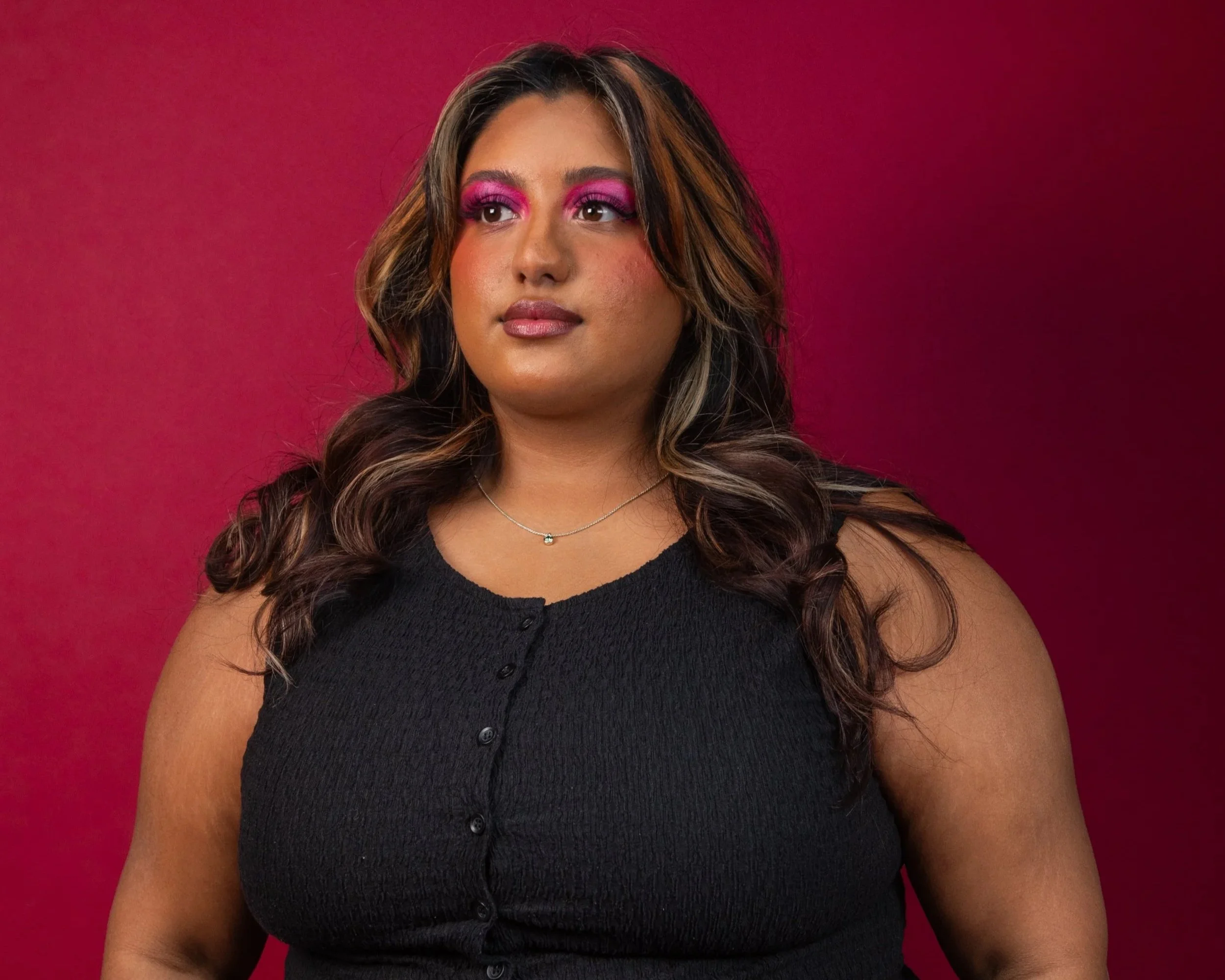
A natural, more serious shot of Shareena looking to one side with her hands by her side.
Claudia: What are your main aspirations for the coming year?
Shareena: For Urban Finds, I hope it really takes off and becomes a platform people love and benefit from. I hope it becomes a household name one day. With WNF, I hope we can collaborate on some amazing campaigns that will really resonate with people and make them feel seen and represented.
Claudia: How has your journey with chronic illness affected you as a person?
Shareena: I have ADHD, and I also have PCOS [Polycystic Ovarian Syndrome]. PCOS and endometriosis are slowly being recognised as chronic illnesses, and that has led to a huge mindset shift in trying to manage my symptoms. I view it as a chronic illness because that is what it is. I have to watch what I eat, when I eat, how much I sleep, and manage my energy levels. Sometimes it just doesn't fit into the normal work structures for “able-bodied” people. On top of that, trying to navigate ADHD as well. Growing up in a brown Indo-Mauritian culture, mental health and disabilities aren't really spoken about. They can act like they don't exist. Growing up, I didn’t understand why I was so exhausted after spending one hour out of the house. Or wondering why I'm struggling to concentrate? Why am I struggling to sleep? Why am I struggling to remember things? This was really hard to deal with growing up, and as I've got older, I've been trying to understand what ADHD looks like and how to manage it. Slowly, I've started to understand myself better, but I feel late to the party, almost. It's a learning curve. Every day, I'm still learning about myself and trying to figure out how to show up for myself fully.
Claudia: What does it mean to you to be represented by With Not For?
Shareena: I love the agency and everything it does, so I'm really excited about this partnership. It’s a huge honour and privilege to be a part of their roster, and it really feeds into that activism that I want to do within the fashion space.
Claudia: How can the readers support your work?
Shareena: By engaging with our content and social media and staying up to date with what we're doing would be amazing. And giving their feedback as well, because ultimately, we want it to feel like it's a space made for you by you.
The app will probably launch next year, around July/August. Even though it will probably be ready in January, we're taking our time with it because we want to. We're working with a lot of universities, focus groups, and charities to figure out how to make this app accessible - our accessibility features are really important. So people engaging with our stuff and telling us what they need is what we want. And I hope to spark conversations about certain topics, like sustainability, the lack of size inclusivity, and adaptive fashion, so that they can also partake in the conversation.
Claudia: Thank you Shareena. I’ll be giving you a follow!
Follow Shareena and Urban Finds on Instagram.
Follow Claudia and Able Zine on Instagram.
Claudia Rose Walder Martinez is a multidisciplinary creative whose work spans art, fashion, literature, print and digital media. She is the Founder and Editor-In-Chief of Able Zine, a publication and platform dedicated to promoting disability arts, culture, and representation.
Image credits: Photography, Mathushaa Sagthidas. Makeup, Aster Rose.